
Melanotan 2: Science, Risks, and What You Should Know
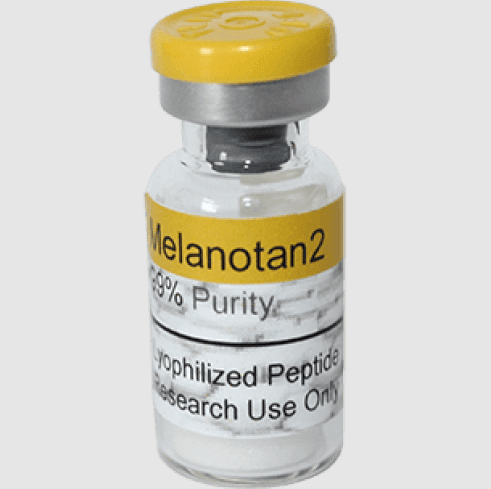
This article examines the evidence behind Melanotan 2 claims, reported concerns and UK safety advice. For the terminology and basic definition, see what Melanotan 2 is. If you are comparing Melanotan 1 with Melanotan 2, see our comparison of the two names.
What published research can establish
The research literature includes an early phase-I study of Melanotan II. Its existence should not be read as a quality certificate for an online listing. Research on a particular preparation cannot verify the ingredients or claimed contents of a different product. Evidence about skin pigmentation does not establish a hair outcome. Our review of hair-colour evidence examines that distinction. For the separate question of how long an observed change lasts, read our review of duration and persistence claims. It explains why follow-up conditions matter.
Reported effects and uncertainty

DermNet’s clinical reference describes flushing, nausea, vomiting and changes in moles among the concerns associated with Melanotan II. It also discusses potentially serious effects and advises against use.
These reports do not establish how frequently every effect occurs. A reported association is not the same as proof of causation, and uncertainty does not justify assurances that side effects are usually mild or that mole changes will always reverse.
UK safety advice
Cancer Research UK’s guidance advises people who have used Melanotan to stop and to speak to their GP about concerns over side effects. It also states that selling and supplying Melanotan injections is illegal in the UK.
Melanotan and cosmetic fake tan
DHA-based fake tans colour the surface of the skin. A cosmetic spray applied to the skin is different from a Melanotan nasal spray. Cancer Research UK also explains that a natural or fake tan does not replace sun protection.
Reading product claims critically
When a listing refers to research or testing, ask what the evidence actually covers:
- Does the reference identify the substance or test the specific product being described?
- Does a test address identity or composition, or does it assess a health outcome?
- Is the claim based on research, an individual experience or published safety guidance?
Pack quantities are product information. They are not evidence of an appropriate dose, a predictable result or safety. M2UK’s Melanotan 2 product information explains the listed formats and quantities.
Other M2UK articles
Further reading includes Melanotan 2 use context and Melanotan 2 and pigmentation.
Sources checked: 15 September 2026.
Product analysis and safety reports in more detail
Evidence about Melanotan 2 comes from different kinds of investigation. A laboratory can analyse a sample; clinicians can describe a concerning event; a regulator can collect suspected reactions. The following examples show why the finding and the method need to stay together when a claim is repeated.
What an analysis of online samples found
A study published in 2015 by Breindahl and colleagues analysed Melanotan II vials purchased from three online shops. The researchers used chromatography and mass spectrometry to examine identity, contents and purity. Reported amounts ranged from 4.32 to 8.84 mg despite the products being labelled 10 mg. Samples from two shops also contained measurable unknown impurities. These were historical samples from the study, not a test of current M2UK stock.
The finding shows why a stated amount and an analytical measurement are different information. It does not establish the contents of every later vial or identify the cause of a particular person’s symptoms. Our vial-quality claims article discusses the evidence a product-specific assertion would need.
Figures from a laboratory report also need their units. A percentage describing impurities and a mass describing peptide content measure different things; neither number is a probability of an adverse reaction. Preserve those labels when comparing summaries or screenshots.
Keep the purpose of a test in view
The early human study linked above investigated a defined experimental preparation. An analysis of a purchased vial asks a different question. Identifying a substance, measuring an amount, observing pigmentation and assessing longer-term health outcomes are separate tasks. A result for one does not automatically answer the others.
When a certificate is cited, look for the sample identifier, report date, laboratory and the measurement actually reported. Then check whether the accompanying claim stays within that scope. The word “tested” is incomplete without those details. A document about composition should not be expanded into a promise of clinical safety or a predictable personal response. The safety-claims evidence checklist separates those questions.
A claim about healthier skin needs a defined health outcome, beyond an observed pigment change. The skin-health evidence article explains how to read the outcome, comparison and follow-up before accepting that claim.
A concerning report does not supply a risk percentage
A 2013 clinical case report by Reid and colleagues describes new atypical moles after Melanotan injections in one patient. Such observations can identify a concern needing further investigation. A single reported case does not give the number of exposed people without that outcome, so it cannot establish a frequency for all users.
The MHRA’s explanation of spontaneous reaction reports makes a related distinction: a report records a suspected association, not necessarily a proven cause. Reporting is influenced by recognition, seriousness, use and publicity. Counts cannot simply be treated as incidence rates or used to rank products by safety.
These limits work in both directions. Reports deserve attention, while a small number of reports does not establish that a product is safe. An informal collection of favourable experiences also lacks a defined comparison and follow-up. For the wider issue of how seller statements should be read, see the supplier-claims guide.
Use the official UK reporting and advice routes
The MHRA’s Yellow Card guidance explains how members of the public and healthcare professionals can report suspected reactions. It also covers concerns about defective or falsified products. A suspicion can be reported without first proving causation; the scheme helps the regulator identify problems that may need investigation.
Reporting information and obtaining care serve different purposes. Cancer Research UK advises people who have used Melanotan to stop and speak to their GP about side-effect concerns. A reporting form, product seller or article cannot assess an individual’s symptoms. The injection-risk questions article connects the claim-reading issues with the broader UK context.
Additional references checked: 12 November 2026. The notes above explain the linked evidence; they do not certify a product or provide preparation, dosing or administration instructions.