UVA, UVB and UVC: Differences Relevant to Sun Safety
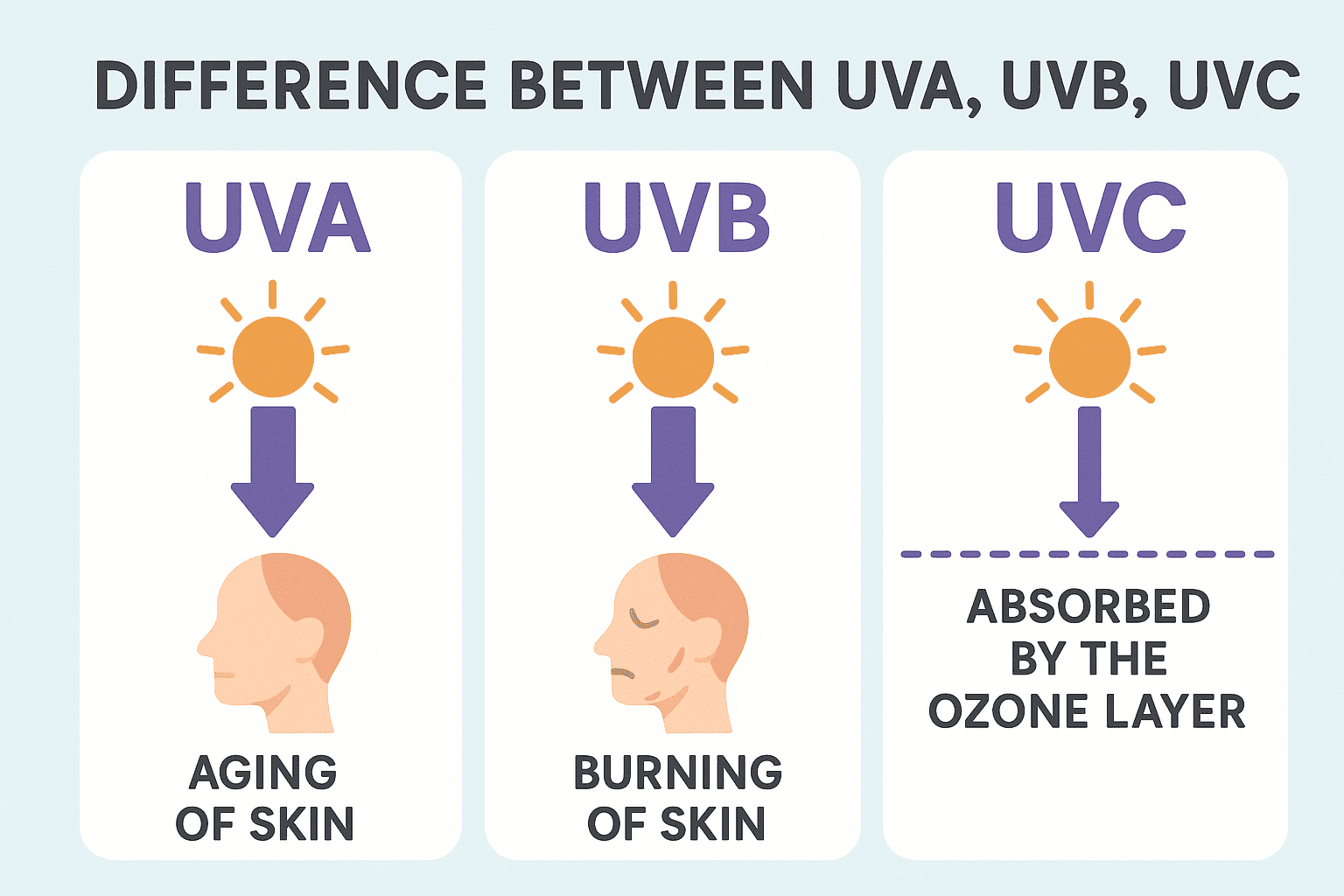
Ultraviolet radiation is grouped into UVA, UVB and UVC by wavelength. These are physical categories, not labels for “good” and “bad” tanning. The amount that reaches a person and the biological effects differ across the bands.
Which bands reach the surface?
The World Health Organization defines UVA as 315–400 nm, UVB as 280–315 nm and UVC as 100–280 nm. UVC from the sun is filtered by the atmosphere and does not reach Earth’s surface. UVA accounts for most of the UV that reaches the ground; some UVB reaches us and contributes to sunburn and skin damage.
Why the distinctions matter
UVA and UVB can both be relevant to skin damage. A statement that one band darkens skin while another burns it is too simple to be a safety rule. Sunbeds are also artificial sources of concentrated UV. A tan is not proof of protection from further exposure.
Use protection, not a product shortcut
NHS sun-safety advice recommends shade, clothing and sunscreen when needed; Cancer Research UK says there is no safe UV tan and warns against Melanotan products. Our UV Index guide explains how conditions change. No peptide or cosmetic colour changes the definitions of UVA, UVB and UVC.