
One-Vial Kit Items Versus Separate Supplies
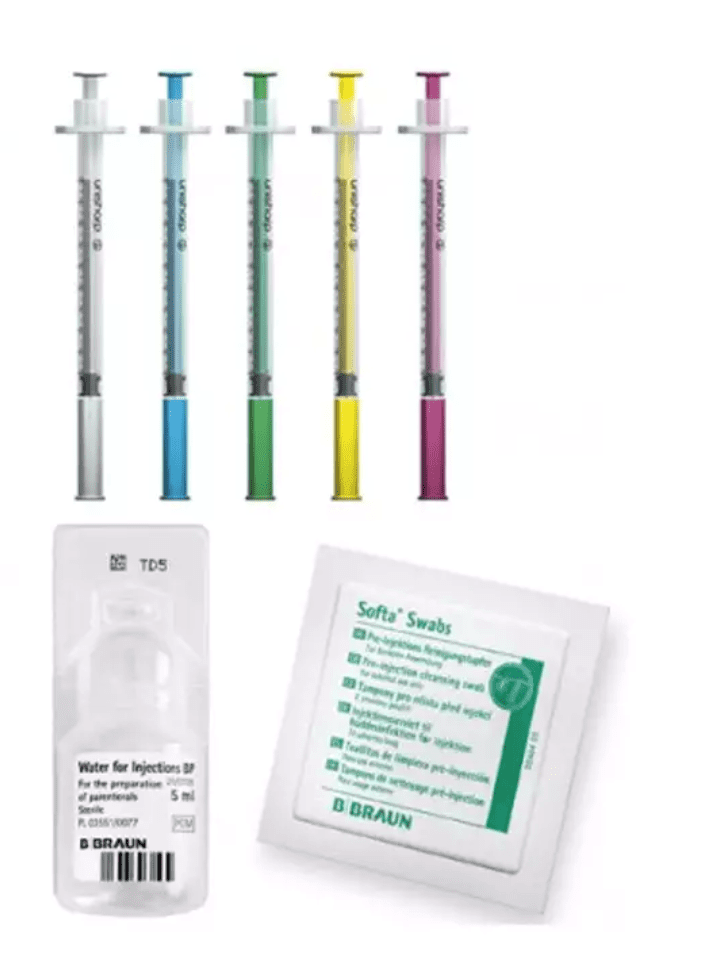
A buyer comparing kit items with separate supplies needs to know which catalogue item includes a vial, which lists only accessories and which individual items would be added separately. Similar names do not make the baskets equivalent.
Start with the whole basket
The one-vial accessory bundle is presented as water, pins and wipes. The one-vial starter kit names a vial too. An individual vial listing may omit those accessories. Use the live product descriptions as the source of current quantities; the accessory contents article explains the specific accessory bundle.
Compare like with like
Write down the exact item names and quantities before comparing a bundle price with separate listings. A “kit” count, a vial count and an accessory count are different units. Availability and product variants can change, so a historical screenshot should not be used as a checkout promise.
Do not turn a pack count into instructions
The number of supplied items is not a dosing plan or a guarantee that a product is safe, sterile after opening or suitable for an individual. An online article should not infer a treatment course from eleven pins or describe how to mix and inject a vial.
The MHRA’s Melanotan II response explains the safeguards missing from unauthorised products. For personal health questions, consult an appropriately qualified professional rather than a shopping comparison.
Reconcile a basket without counting the same item twice
A basket can describe a complete selection at one level and describe the same selection’s components at another. Comparing those levels as though each were an independent purchase can duplicate an item or conceal an omission. The following examples concern commercial records, not a method for assembling or using medical supplies.
Keep each selected line separate from a component description
Begin with the selected order line rather than every descriptive phrase on the page. The line identifies a commercial selection and its basket quantity. A component description may explain what one unit of that selection contains. Keeping those levels separate prevents a component reference from becoming an additional selected line merely because it appears in another part of the description.
Imagine a fictional basket with a bundle line and an expanded description of that bundle’s accessory group. The expanded description can identify the objects the bundle says it includes. It should not be added as another complete purchase without a separate selected line. The number of descriptive entries is not necessarily the number of independently ordered items.
The one-vial selection comparison explains why a common vial count does not establish equivalent contents. A basket reconciliation needs the same distinction between the shared object and the additional stated inclusions. Calling both selections kits does not eliminate differences in their itemised descriptions, selected variants or commercial units.
A photograph should remain a separate record. It may illustrate several objects without identifying which order line supplies each one. The written inclusion statement and selected line need to establish that relationship. Otherwise the arrangement in a picture can create an apparent complete basket that the actual commercial selection does not describe.
If a relationship remains unclear, record the line reference and the component whose status is uncertain. That identifies an answerable commercial question. It does not require estimating a use quantity, inferring compatibility or treating the list of objects as evidence that an unlicensed substance or an entire process has been assessed.
Identify whether an apparent addition is already included
An optional addition and an included component can have similar names while occupying different positions in a basket. The distinction is whether the record identifies an independently selected item or describes something within another selection. A comparison should preserve that relationship instead of deciding from a matching word alone that there are either one or two supplied objects.
For an illustrative case, the basket names an accessory separately and a bundle description mentions the same accessory category. The two statements may refer to separate objects, but that is not established simply by the repeated category name. The selected lines and inclusion wording need to identify what each reference concerns before a total can be stated reliably.
The opposite error is to merge two independent selections because their descriptions resemble one another. If the basket does identify separate selected lines, the comparison should keep them separate. A repeated description can be legitimate. What matters is the commercial relationship documented by the record, rather than a rule that every repeated word must represent duplication.
A later clarification can resolve that relationship when it identifies the specific basket or selected version. Keep the clarification alongside the line it addresses. An answer about one component should not overwrite unrelated quantities or specifications, nor automatically apply to another order that happens to use the same product name.
The corrected inventory should show which descriptions were references to the same object and which were independent selections. It should not enlarge that documentary correction into a claim about condition or medical appropriateness. Resolving a duplicated commercial reference improves the account of what was selected; it does not assess every property of the objects described.
Retain unresolved basket fields without inventing a match
An unresolved field should remain visible in the comparison. A sparse record can make it tempting to complete one selection from the more detailed wording of another. That creates a combined description that neither source actually supplied. State which item, quantity or relationship has not been identified instead of treating the apparently fuller account as a universal template.
The repeat-order comparison guide explains why an earlier confirmation has a defined historical subject. It can identify what that order said at the time without establishing what a later selection contains. A basket assembled from present records should not borrow an old inclusion merely because a familiar product name appears on both documents.
Separate an unreported field from an explicit difference. If two records give conflicting quantities, retain the conflict for clarification. If one is silent, describe the silence accurately. Neither situation should be forced into a reassuring equivalence statement, and neither proves a physical supply error without the relationship to the actual order being established.
A complete commercial account may still leave specification or condition questions open. A line saying an accessory is included does not identify every material property or establish the condition of a particular unit. Those questions need their own relevant information. There is no advantage in making the basket record responsible for an assessment it was not created to provide.
The useful final comparison identifies each selected line, its commercial unit, its stated inclusions and any unresolved relationship. That makes a bundle-versus-separate-items enquiry concrete without inventing a total from pictures or repeated descriptions. It also keeps the outcome within catalogue interpretation rather than translating a collection of supplies into a personal routine or a product-safety assurance.
References checked: 15 November 2026.