
One-Vial Kit vs Standalone Vial: Listing Differences
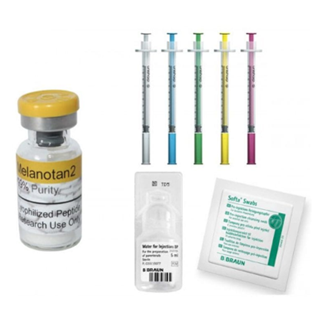
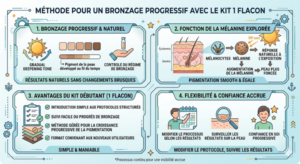 “One vial” can describe a standalone product or a bundle that also lists accessories. This comparison concerns the current item descriptions, not a use schedule or a predicted tanning result.
What the two listings name
The one-vial starter kit currently names one Melanotan 2 vial, one water item, eleven syringes and eleven swabs. The standalone 10mg vial is a separate product whose listing says water is not included. Check both pages immediately before ordering because packaging and availability can change.
Why accessory count is not a course
Eleven syringes in a bundle do not imply eleven recommended injections or a supported dosage plan. Nor does the inclusion of water verify its specification for a particular use. Read each component label rather than treating a package name as a clinical instruction.
What the comparison cannot establish
Neither listing independently demonstrates purity, effectiveness, a consistent tan or protection from UV. For evidence and risks, see the site’s scientific context article and Cancer Research UK.
Compare the exclusions before calling two one-vial orders equal
Two orders can each mention one vial while giving very different information about everything else. A useful comparison distinguishes a stated inclusion, a stated exclusion and a field the source has not answered. Treating those three states separately is more reliable than completing one description from the other.
Separate stated inclusion from an unreported field
Read an inclusion as a positive statement made by the source for a particular selection. It identifies what that description says is supplied. Keep the selected variant and commercial unit with it. A feature shown for a different option should not be transferred merely because both options share part of a name or a familiar photograph.
An unreported field is different from a stated inclusion. If a short description does not mention an accessory, that silence alone does not establish that the accessory is supplied or excluded. The comparison can say that the field has not been answered in that record. It should not substitute the reader’s expectation for the missing statement.
Imagine two fictional records, East and West. Both name a vial, but only East identifies an accessory group. West’s shorter description cannot be completed by copying East’s group. The shared vial reference does not establish that the commercial selections contain the same additional objects, use the same presentation or answer the same specification questions.
The whole-basket reconciliation guide develops the next level of this problem. A basket may contain a separate accessory selection as well as a vial line. That separate line should be recorded in its own right, rather than retroactively changing what the vial-only description states. Package content and basket content are related but different inventories.
When requesting clarification, identify the unanswered field rather than suggesting its value. This leaves the seller able to answer what is actually listed for the chosen item. A response can improve the commercial record without certifying the condition of a particular object, establishing compatibility or recommending that anyone construct a medical-use arrangement.
Keep an explicit exclusion with the selection that states it
An explicit exclusion applies to the object and selection it names. Preserve that qualification when comparing descriptions. A statement that one accessory is not included should not become a claim that every possible accessory is excluded, just as it should not be treated as proof that all unnamed objects are supplied.
The literal exclusion-scope guide explains why a negative statement has a defined boundary. In a comparison, quote the relevant object accurately and identify which selection carries the exclusion. The other selection needs its own statement. A missing exclusion on one page does not automatically supply a positive inclusion on another.
For an illustrative example, Selection Hazel expressly excludes one named item, while Selection Rowan gives a broader component list. The comparison can retain Hazel’s exclusion and Rowan’s separate declarations. It should not erase the difference because both descriptions contain the same vial count, nor should it infer further exclusions that neither source has stated.
Dates and variants can make a genuine difference to this reading. An old confirmation may identify a previously supplied bundle, while the current listing describes a revised selection. Preserve each statement within its own record. An answer about the revised item does not necessarily establish the contents of the historical order or every earlier version.
The result may be a comparison with one confirmed difference and several unanswered fields. That is still useful. It explains what is actually known about the selections without turning a partial contrast into a general ranking. An exclusion is a commercial statement about contents, not an assessment of purity, effectiveness, clinical suitability or the condition of retained accessories.
Compare order identity before discussing equivalence
Equivalence requires a stated comparison boundary. If the question is whether two descriptions mention the same vial count, the answer may be narrow. If the question is whether the complete orders contain the same objects, more fields need to be compared. The first answer cannot stand in for the second simply because it is easier to obtain.
The five-vial order comparison applies the same distinction to a different declared set. A common number of named vials can coexist with different accessory inclusions and different selected order units. The package label should therefore be read alongside the itemised description rather than used as a shortcut to complete commercial equivalence.
Keep the identity of each record visible when summarising the comparison. A catalogue title, an order confirmation and a later seller message were created at different times and may cover different subjects. They can clarify one another when the connection is explicit. Combining their most detailed fields without that connection would construct an order description that no source actually supplied.
A complete commercial comparison would still leave other questions separate. It would not establish that the contents of individual vials were independently assessed, that objects are compatible or that a particular outcome would follow. Those conclusions require their own appropriate information. The purpose of the comparison is to describe selections accurately, not to recommend one for a personal health purpose. The kit-count boundary guide explains why a grouped component and an individual-unit count must remain distinct within that comparison.
The most useful final wording identifies a match, an explicit difference or an unanswered field for each relevant object. That wording is more informative than calling one option complete and the other incomplete without explaining the chosen boundary. It preserves the shared vial count while preventing that one fact from carrying conclusions about every other part of the order.
References checked: 15 November 2026.