
Natural-Looking Melanotan 2 Claims and Kit Labels
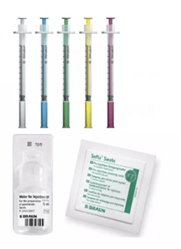
“Natural-looking” describes an appearance that different people may judge differently. It is not a standard measure of a product’s contents or effect. A kit listing can describe items in a bundle; it cannot promise a particular shade for a particular reader. This guide keeps the label and the result claim apart.
Start with the written kit contents
A bundle title can suggest convenience while two products with similar names include different numbers of vials or accessories. Read the current written item list, quantity and product format. A photograph may be illustrative; it does not independently verify the contents, composition or quality of what arrives. The injection-kit overview explains the site’s kit formats, while the individual listing gives its stated inclusions.
Do not convert a stated vial quantity into a number of injections or a duration of use. Such an estimate depends on assumptions about administration and is not a reliable product specification or health recommendation. Our starter-kit listing guide explains how to compare bundle descriptions without making that leap.
What would support a “natural-looking” claim?
Cancer Research UK describes Melanotan II as an artificial substance that stimulates pigment cells, which can make skin look darker. That mechanism does not prove that a shade will appear even, subtle or natural to an observer. A before-and-after photograph may reflect lighting, UV exposure or cosmetic tanning as well as any claimed product effect.
For a specific outcome claim, ask what was measured, which product was examined and whether the evidence applies to people beyond a few testimonials. The Melanotan 2 definition guide explains the basic terminology; this article focuses on how label language and appearance language differ.
Quality and safety are separate questions
The MHRA explains that injectable and pen products containing Melanotan II are classified as medicines and that unauthorised products lack its quality, safety and effectiveness safeguards. A carefully printed label does not establish regulatory authorisation.
Cancer Research UK advises that Melanotan nasal and injection products are not safe to use. It also says a tan does not protect skin from UV radiation. A “natural-looking” claim therefore cannot be treated as a statement about safe exposure or a substitute for independent health guidance.
Define the observer behind natural-looking wording
Natural-looking is a judgement made by an observer under particular conditions. Defining the observer and the question makes that judgement understandable without turning it into a universal product property. The fictional rating examples below concern appearance assessment only; they are not results from a Melanotan study.
State whose judgement a rating records
A personal preference, a panel rating and a clinician’s assessment have different subjects and methods. A person may say they like an appearance without assessing its cause or health implications. A panel may answer a specified visual question without knowing anything about product identity. The observer’s role belongs beside the reported judgement.
Imagine a fictional panel asked which of two displayed images it prefers. That question records a preference between those images. It does not establish which appearance is natural, whether either image represents an untreated baseline or whether a named product caused the difference. The wording of the question limits the meaning of the answer.
Selection matters too. A group chosen because its members already prefer a particular style cannot automatically represent every reader’s taste. The result can describe those respondents while leaving broader preferences unknown. A percentage of favourable ratings needs the respondent group and question, rather than appearing as an unqualified property of the item.
Our image-causation guide explains why even a well-described judgement does not identify what caused the appearance. Observer agreement and causal evidence answer different questions. A consistent panel preference cannot verify the contents of a retail vial, distinguish the effects of several intervening events or demonstrate a predictable personal outcome.
Keep the rating question and viewing conditions together
The rating question should travel with the result. Even, subtle, darker and natural-looking are not interchangeable outcomes. A person may rate an image highly on one question and differently on another. Combining the answers into a single positive score would require an explained method and should not conceal the distinct judgements.
Viewing conditions also affect what the task asks observers to assess. A cropped image, a full portrait and a side-by-side comparison provide different information. Lighting and display conditions belong to the assessment context. A rating of the displayed image should not be described as a direct measurement of someone’s skin under every condition.
For a fictional example, a panel rates two photographs under one defined presentation. A later advertisement uses only the preferred crop with a different caption. The original rating does not automatically apply to the new presentation or to the broader claim in that caption. The source result should remain attached to the task actually completed.
A useful account names the observers, the question, the images and the viewing conditions that were recorded. Missing details should remain missing. Adding a decimal place to an unexplained score cannot recover them, and a polished visual layout does not make a subjective response comparable with an unrelated clinical or analytical measurement.
Avoid turning a preference into a property of every product
A preference result cannot be transferred to every product carrying a similar name. The rating may concern selected images rather than a defined product at all. Before interpreting it as a product effect, the evidence would need to connect the assessed appearance to a specified item and an appropriate comparison, rather than rely on visual proximity.
Nor does natural-looking mean naturally produced or medically suitable. Those are different meanings of natural. An observer can judge an appearance without determining the substance involved, its manufacturing conditions or the presence of unwanted effects. The adjective should not move between those meanings without a separate basis for each claim.
Consider a fictional summary saying that a panel preferred Image A. A later sentence saying every customer will achieve A’s appearance introduces a prediction that the panel did not test. A further claim that the appearance is healthier adds another outcome. Neither extension follows from the original preference question.
The useful conclusion preserves the judgement in its measured setting and leaves unsupported extensions open. It can describe who preferred what without promising a shade, certifying a kit or equating attractiveness with protection. That is enough to make natural-looking language intelligible while keeping the separate listing and health questions visible.
References checked: 14 November 2026.