Sunbed Hygiene and UV Risk: Two Separate Questions
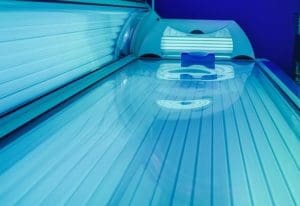
A clean surface and an ultraviolet lamp raise different questions. Hygiene practices may address contact with a shared surface, but they do not change the radiation emitted by a sunbed. Calling a disinfected bed “safe tanning” confuses the two.
What cleaning can and cannot address
A facility’s cleaning process may be relevant to general surface hygiene. A visitor cannot infer from a clean-looking bed that the equipment is correctly maintained or that UV exposure is harmless. This article does not supply a protocol for operating a sunbed.
The UV risk remains
NHS sun-safety advice says sunbeds use concentrated UV radiation and are linked to skin cancer, premature ageing and sunburn. Cancer Research UK says there is no safe UV tanning and advises against sunbeds. Wiping a surface does not reduce those radiation risks.
A cosmetic alternative has a different risk profile
Topical fake tan or spray tan can create a tanned appearance without deliberate UV tanning; read the chosen cosmetic’s label and consider personal skin sensitivities. These are not Melanotan nasal sprays or injections, which Cancer Research UK separately advises against using.
For a wider comparison, see UV tanning and cosmetic alternatives.
Match a sunbed assurance to the hazard it addresses
An assurance becomes easier to assess when it identifies the hazard it addresses. A cleaned surface, an equipment record and a conclusion about ultraviolet radiation concern different questions. Reading them separately prevents a limited statement from turning into a general safe-tanning label simply because several reassuring details are presented together.
State which hazard the assurance addresses
Begin with the actual subject of the assurance. A statement about a surface refers to that surface and the condition being described. A statement about an equipment check refers to the check and its scope. Neither automatically describes every exposure associated with the setting. The reader should not have to infer an all-purpose safety finding from one limited record.
For an illustrative comparison, a facility account may mention a cleaning record and a separate maintenance record. The existence of both documents can be reported, but their subjects remain different. A date on one does not establish that the other was completed, and neither should be described as answering a radiation question unless the relevant record actually assesses it.
The wording of the claimed outcome matters. Clean-looking, documented as cleaned and independently assessed for a particular property are different statements. A photograph can contribute to an appearance account while leaving the other statements unresolved. The explanation should preserve what the available source actually shows rather than using a favourable-looking image to complete every field.
An attributed reassurance also needs its source. A seller’s description, a facility statement and a public-health reference have different roles. Placing them next to one another does not make them independent confirmations of a single conclusion. Identify which statement comes from which source before using the combined presentation as evidence for the overall wording.
If a control is described without its purpose, the claim remains incomplete. Asking what the record concerns is more precise than assuming it addresses every hazard in the setting. The question can be clarified without supplying a cleaning procedure or instructions for operating equipment. Identifying scope is a documentary task, not a substitute for the relevant technical or clinical assessment.
Keep the surface record separate from the radiation question
A surface record does not measure radiation simply because both concern the same piece of equipment. The physical proximity of the subjects should not merge their evidence. A useful account can acknowledge the surface statement while keeping the radiation question separate. There is no need to turn one limited observation into a conclusion about the complete activity.
The Cancer Research UK explanation of sunbeds and skin cancer concerns the harms associated with UV radiation. A claim about surface cleaning does not answer that public-health question. Its presence beside a sunbed description should not be used to imply that the radiation issue has been removed or independently reassessed.
The skin-texture and protection explanation shows a related reasoning error in a different setting. A change to the appearance or feel of a surface is not automatically evidence about UV protection. The subjects differ, but the reading principle is similar: identify the outcome actually described before enlarging it into a conclusion about another type of risk.
An absence of a visible problem is another limited observation. An image or personal account may not report everything relevant to the question being asked. The omission should remain an information limit rather than becoming a general guarantee. A selected view of a setting cannot establish every condition, exposure or later outcome associated with it.
Dates and settings should remain attached to each statement. A current facility webpage may refer to a routine in general terms, while an individual account concerns a particular occasion. The page’s publication date does not independently establish what happened on that occasion. A comparison should retain the distinction instead of allowing the newer date to validate the older account.
Do not combine unrelated assurances into a safe-tanning label
Several narrow assurances do not automatically combine into one broad assessment. A record about a surface and a record about equipment identity can both be relevant while leaving the radiation question unanswered. Adding more reassuring labels does not supply the missing connection. The explanation should show what each statement establishes and what remains outside its scope.
The vitamin D and personal-status explanation addresses another claim sometimes associated with sunlight or tanning equipment. A general nutrient-source statement does not change the scope of a surface record, and neither statement should be used to manufacture a personal reason for UV tanning. The public-health and individual questions remain distinct from commercial presentation.
A precise enquiry can therefore ask which hazard a particular assurance concerns. If the answer identifies only surface condition, retain it at that level. Do not allow the clarification to become a recommendation about using the equipment or a promise that the broader activity has been assessed for a person. One completed field can coexist with unresolved questions.
The choice of an appearance alternative also has its own subject. A discussion of cosmetic colour is not the same assessment as a statement about a UV-emitting device. The existence of alternatives should not be turned into a comparative score without defined outcomes and relevant evidence. Each account should retain the source, product or activity it actually describes.
The finished explanation can name the assurance, identify its source and match it to the hazard it addresses. It should leave unrelated conclusions outside that finding. This makes the article useful for reading claims while avoiding a surface-cleaning protocol, equipment instructions, an exposure schedule or any suggestion that a hygienic presentation establishes safe UV tanning.
References checked: 15 November 2026.