
Melanotan 2 Nasal Kit: Quick-Tan Claims
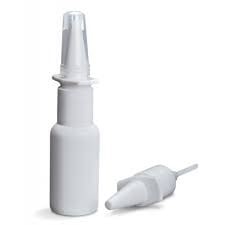
“Quick, safe tan” combines speed, safety and appearance claims. A nasal-kit product page cannot prove any of these from a bottle photo or customer anecdote.
What would test speed?
A meaningful comparison would state the precise product, baseline colour, measurement dates and exposure to UV or other tanning products.
What is in the kit?
Check whether the live listing includes bottles, vials or other components, and whether items are sold separately. A kit title is not an ingredient certificate.
Do not equate a tan with UV defence
Cancer Research UK warns that marketed Melanotan products lack safety, quality and effectiveness testing. The NHS says a tan does not protect against harmful sunlight.
A nasal kit can have several components and the word “kit” should not conceal the distinction between an empty container and a preparation. If a claim says the format is easier, ask what task is being compared and whether usability was actually measured. Ease of purchase or handling cannot be substituted for evidence of dose consistency, product composition or clinical safety.
Review the nasal spray kit category for current inventory. Further reading: nasal-kit product listings, Cancer Research UK and NHS sun safety.
Unpack a quick-result promise for a nasal kit
Quick can refer to ordering, dispatch, a person’s first observation or a measured change. These are different clocks, and a nasal-kit claim becomes misleading if it moves between them without saying so. The fictional sequence below explains how to read the claim; it is not an expected timeline or advice to begin using a product.
Separate the order clock from the observation clock
An order clock begins with a commercial event such as an order being recorded. A dispatch event and a delivery event have their own timestamps. None measures a biological change. A review saying that something arrived quickly may accurately describe delivery while offering no evidence about the contents or their effects.
An observation clock needs a different starting point. A dated photograph records an image at a particular time, but its relationship to a product is not established merely because the image appears in an order review. The image might predate delivery, show an earlier appearance or include other changes that the review does not describe.
For a fictional example, imagine an order recorded on Monday, delivery on Thursday and an image posted on Friday. Counting from Monday produces one interval; counting from delivery produces another. Neither interval establishes when any observed change began, what caused it or whether the image was taken on the day it was posted.
The label quick should therefore retain its stated event. If the source measures dispatch, describe dispatch. If it reports a personal observation, identify it as an observation rather than a controlled result. Combining the two into one headline can make the evidence appear to answer a question that was never measured.
This distinction is practical as well as analytical. It prevents a service testimonial from becoming an implied product-performance certificate. A prompt transaction can be evaluated on its own terms without suggesting a predictable timeframe, a verified formulation or a health assurance for the item supplied.
Keep the nasal-kit version attached to the evidence
A result statement also needs a stable product identity. Nasal kit may describe several objects or versions, and a bottle photograph does not specify the full formulation. If the source concerns a different preparation from the selected listing, the timeline cannot be transferred merely because both descriptions use the same broad format name.
Suppose a fictional review refers to an earlier kit version while the current page lists a changed presentation. The review remains an account of its own subject and date. It does not automatically become evidence for the revised item. Retaining the version makes that boundary visible instead of letting an unchanged product name imply unchanged evidence.
The measured outcome needs the same precision. First noticed colour, an instrument reading and a satisfaction rating are different observations. A claim cannot move from one to another while retaining the same result date. The original wording should identify what was recorded, how it was recorded and whose account it represents.
Other relevant events should not disappear from the sequence. A change in lighting or the use of a cosmetic can affect the interpretation of an appearance comparison. Recording such events is not a method for testing a product at home. It is a reason an anecdotal sequence cannot establish that the product caused the photographed appearance.
If the identity or outcome is unclear, the appropriate conclusion is limited: the account does not establish a product-specific result interval. There is no need to replace the missing information with a common timeframe or a more confident adjective. The uncertainty concerns the record itself, not a deadline a reader should try to meet.
Distinguish a first observation from a confirmed change
A first observation is not automatically a confirmed change. A person may notice a difference under one set of conditions and not under another. Without comparable observations, the record cannot distinguish a persistent change from a recording difference. That limitation remains even if the person reports the observation sincerely.
Imagine fictional images recorded at two visits with a different light source at the second. A darker appearance in the later image does not by itself identify when a change occurred or whether the recording conditions explain it. Confirmation would require an appropriate measurement approach, not simply another favourable image selected from the same occasion.
An account can also report only successful observations. If unsuccessful attempts or unchanged images are omitted, the published first result is selected from a larger, unknown set. The date may be accurate for that selected image while remaining unrepresentative of the complete record. The missing denominator matters to the interpretation of a quick-result promise.
Keep a claim’s speed, consistency and safety elements separate. Evidence of a particular observation date cannot verify the item’s contents or the absence of unwanted effects. Nor does a documented transaction establish either of those points. Each question needs information relevant to its own subject rather than borrowing reassurance from a neighbouring fact.
The existing timeline and health references above provide the wider context. This section does not give a use schedule, an absorption estimate or a point at which someone should expect a change. Its purpose is to keep commercial events, personal observations and measured outcomes from being compressed into one unsupported promise of quick results.
References checked: 14 November 2026.