
Alcohol Swab Label and Maker Claims
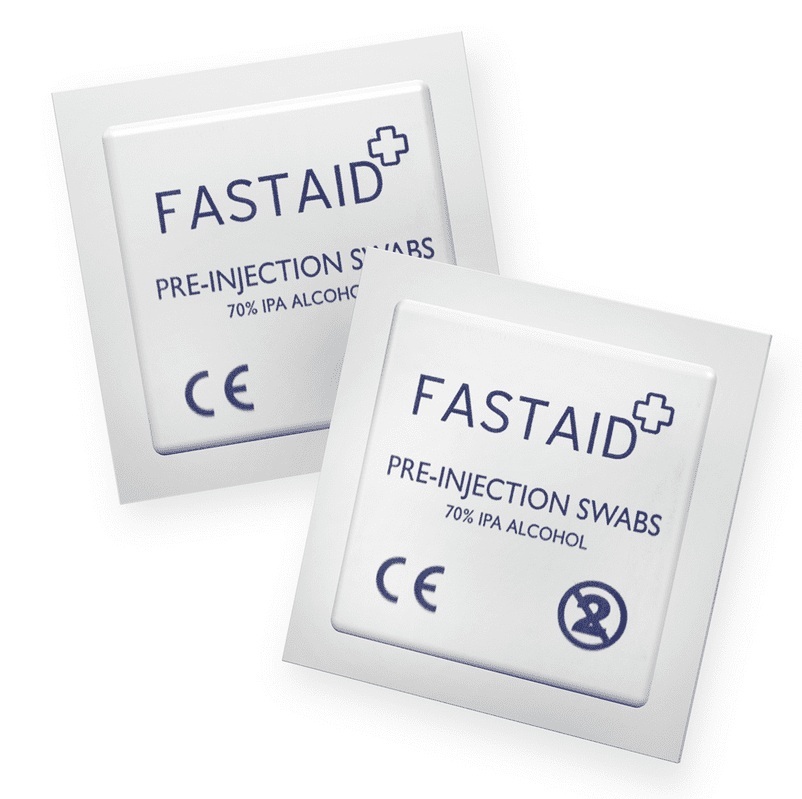
 The current ten-swab listing states 70% isopropyl alcohol and names Fastaid Medical and Mobility Ltd as a UK manufacturer. Those are seller assertions to compare with the actual package, not independent verification by this article.
What to read on the package
Check the pack count, alcohol concentration, manufacturer details, individual wrapper, batch or lot reference, expiry and any sterility statement. Do not extend an attribute shown for one product to every swab pack on the site. An unopened wrapper and a seller description cannot by themselves guarantee an outcome.
Separate accessory claims from clinical safety
A swab is one accessory. It does not prove that an unlicensed Melanotan product or an injection is safe, and this article does not provide procedural advice. The site’s existing ten-pack guide covers the count; this article is specifically about verifying the label and maker claims.
Distinguish the named organisation from its role on a label
An organisation name is informative only when the record preserves the role assigned to it. A maker, supplier, importer and retailer are not interchangeable labels. The examples below explain that documentary distinction; they do not independently authenticate a named business, a swab presentation or a seller’s existing product statements.
Retain the role beside an organisation name
Record both the name and the relationship the source claims. A catalogue may say that an item is supplied by an organisation, while a package may use a different role description. Preserve the actual wording rather than replacing every business reference with manufacturer. Otherwise a name can remain accurate while the role attributed to it changes without supporting evidence.
Imagine a fictional label naming Organisation Finch and a retailer page naming Organisation Heron. Those names do not necessarily contradict one another. They may refer to different roles in the supply record. The comparison needs those role labels before deciding whether the statements conflict or whether they are describing different relationships involving the same presentation.
The MHRA’s UK medical-device guidance distinguishes manufacturer, importer and UK responsible-person roles. That is regulatory context for reading the attribution, not confirmation of which role a particular business performs for the accessory described here. The appearance of an address alone should not be used to supply the missing role or authenticate another product statement.
Keep a trading name, a legal entity and a product brand distinct when the available documents distinguish them. Similar spelling does not establish that two references have the same subject. A brand visible in an image may help identify the illustration, while a role statement on an actual presentation concerns a more particular record.
If the relationship remains unclear, make the question precise. Identify the selected item, the organisation name as written and the role requiring clarification. Do not turn uncertainty about a documentary attribution into an allegation about a business or a reassurance that every product property has been independently verified. The unresolved field should retain its exact subject.
Do not promote a seller attribution into independent verification
A seller’s attribution is a statement by that seller. It may accurately reproduce information from a package or document, but the attribution alone does not show that an independent check has occurred. Keep the source of the statement visible. A comparison should not silently change seller-reported information into a verification performed by the article or its reader.
For an illustrative case, a description names an organisation and lists a component property in the next sentence. The proximity of the two statements does not establish that the named organisation supplied the evidence for every property. Each attribution needs a relevant source. The association should not grow stronger simply because the layout presents the words together.
Our component-versus-system explanation addresses the next unsupported step. Even a properly attributed accessory statement does not verify another substance or an entire process. A named organisation, an included component and a desired outcome should therefore remain separate subjects unless the source supplies the particular evidential relationship connecting them.
A document can be genuine while answering a narrower question than the claim beside it. It might identify a company, a presentation or a particular property without establishing clinical suitability or the condition of each supplied item. The comparison should preserve what the record does answer rather than treating authenticity as permission to extend every conclusion.
The same discipline applies when a statement is incomplete. Missing independent verification is not itself proof that an organisation name or product field is false. It means the supplied material does not establish the stronger verification claim. Retaining that distinction avoids both unjustified reassurance and an unsupported adverse conclusion about the people or items named.
Match a clarification to the labelled presentation
A later clarification should identify the presentation and version it covers. A response about a current pack may not describe a historical image, an earlier selection or a similarly named accessory. Keeping the scope explicit prevents a helpful answer from being copied across records that share only part of a name.
Imagine an enquiry containing a catalogue image, a selected product reference and a photograph of a label. Those are three records with potentially different dates and subjects. The answer should say which one it clarifies. A general statement about an organisation does not automatically settle a conflicting field on every document included in the enquiry.
Preserve the exact field that was clarified. Confirmation of a supplier role does not establish a manufacturing location, a material specification or a sterility claim that the answer did not address. The comparison becomes more useful when the resolved attribution sits alongside the properties that remain unanswered, instead of replacing the whole record with a broad verified label.
If a correction changes a role description, retain the earlier wording as part of the documentary history. That allows a later reader to understand what changed and why a previous summary may differ. The correction should not imply that the physical item changed at the same time unless a separate record establishes that different subject.
The finished account should identify the organisation as named, its attributed role, the source making the statement and the presentation to which it applies. Those relationships make a label comparison more exact without inventing certification. They also keep an accessory enquiry within its commercial and documentary scope rather than turning it into a medical-use recommendation.
References checked: 15 November 2026.