
Alcohol Pre-Injection Swabs: Pack Label Limits
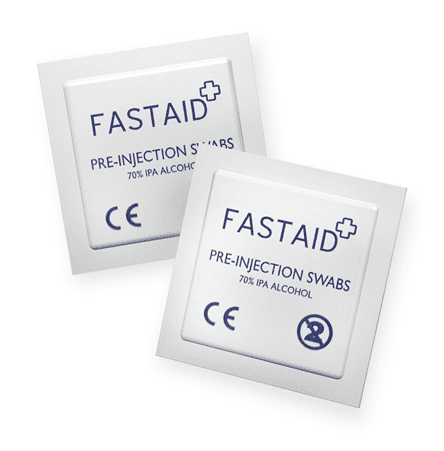
A “10 X” swab title should first be read as a count. A swab can be one item in an accessory listing, but it is not evidence of a sterile injection procedure or safe use of an unauthorised peptide.
Check the item specification
A product page should state whether it contains ten individually packed swabs and provide the relevant pack details. Do not infer medical suitability, sterility after opening or a particular technique from a marketing title.
Avoid safety guarantees
The risk of infection is not settled by purchasing a cleaning accessory. Professional medical standards involve much more than one item, and an article about a retail pack is not procedural training.
Keep the product categories distinct
Our accessories guide explains listing terminology. Cancer Research UK warns about the separate safety and quality concerns with marketed Melanotan products.
Further reading: accessories guide, Cancer Research UK.
Keep the purpose on a swab label within its stated scope
A purpose statement needs an identified source. Manufacturer wording, a retailer’s title and a reader’s intended activity can concern different propositions, even when they appear beside the same accessory. Keeping those propositions separate helps a swab description remain a statement about the labelled item rather than an assurance about an entire procedure.
Attribute the purpose to the source that states it
Read who is making the statement before deciding what it establishes. A manufacturer label attributes particular wording to the named presentation. A seller may summarise or shorten that wording in a catalogue. A reader may then have a further purpose in mind. Those stages should remain distinguishable instead of becoming one anonymous claim about the object.
In a fictional record comparison, a packet names an accessory category while a retailer adds a broad reassurance in the page heading. The packet establishes the wording shown on that packet. It does not independently establish every additional implication of the heading. Retain the two statements with their sources rather than treating the larger display text as manufacturer evidence.
A business name also needs its role. The name may identify a manufacturer, a distributor, a retailer or an organisation mentioned in an account. Its presence on a page should not be used to fill a missing attribution elsewhere. A precise description says which statement the organisation is associated with and which labelled presentation is being discussed.
Dates and versions help keep that attribution useful. A current seller description can differ from an older package image without explaining which wording applies to the selected item. The relevant clarification identifies the actual version covered. It should not silently update every archived description or make all similar-looking presentations share one documentary history.
Where the source of an intended-purpose statement is unclear, retain the uncertainty. A request for the corresponding label or manufacturer document can clarify the product record. That is a narrower question than asking a seller to decide whether an activity is appropriate for a person. A commercial attribution should not be enlarged into an individual clinical recommendation.
Separate a supplied description from a wider reassurance
An accessory description and a whole-system assurance have different subjects. A statement about the item supplied does not independently assess another substance, every accompanying component or the complete set of circumstances someone imagines. The fact that an accessory is commonly named in a category does not make the category a completed assessment of those circumstances.
Imagine a catalogue sentence that begins with a count and ends with a broad promise. The count may be a clearly stated commercial field, while the promise needs different evidence. Confirming the first part does not confirm the second. Break the sentence into its actual propositions before allowing one verified listing detail to validate everything that follows it.
The packet-identity and packaging-condition explanation addresses one of those separate propositions. A label-purpose statement does not establish the condition of a particular packet. Equally, a condition statement about a packet should not be stretched into a finding about every possible purpose. Both can be relevant while retaining different evidential boundaries.
A claim can be narrower than a reader’s question without being useless. A well-attributed accessory description can help identify the object being offered. Its usefulness does not depend on treating it as a conclusion about a whole process. Keeping its limits visible makes the information easier to assess and avoids adding a reassurance the source did not supply.
Public-health guidance has another role again. It addresses health concerns within the scope of the relevant source. An accessory label should not be used to dismiss that guidance merely because it sounds familiar or technical. The commercial record and the health question need to remain separate, even when they appear together in an attractive bundle description.
Clarify the label without requesting a personal-use method
A useful clarification identifies the selected reference, the disputed wording and the source it is meant to summarise. It might ask which presentation a purpose statement describes or whether a category term has been shortened. These are questions about the accuracy of a product description. They do not require inventing a technique or turning a catalogue conversation into procedural training.
The supplies catalogue and supporting explanations help locate the appropriate record for the item under discussion. A swab listing, a syringe listing and a container listing have different specification fields. Information about one should not fill an unstated property of another simply because the items are offered in the same part of the site.
Keep the answer with the field it resolves. A response identifying the manufacturer wording clarifies attribution. It does not automatically settle packaging condition, the identity of another material or personal suitability. Recording the remaining questions is more informative than using one newly completed field as a general declaration that the entire selection has been assessed.
The same care applies when comparing two descriptions. One may state a purpose clearly while another leaves it unreported. The comparison can describe that difference without assuming that the second item shares the first item’s wording or necessarily has a different purpose. An absent field and a contradictory field are different findings and should remain visibly different.
An accurate finished account names the accessory, attributes the particular purpose statement and preserves the relevant qualification. It can guide a reader towards the right documentary question while leaving broader health and use-related decisions to the appropriate assessment. A clear label is useful product information; it is not a substitute for evidence about everything someone might associate with the item.
References checked: 15 November 2026.