
Alcohol Swabs: What They Cannot Verify
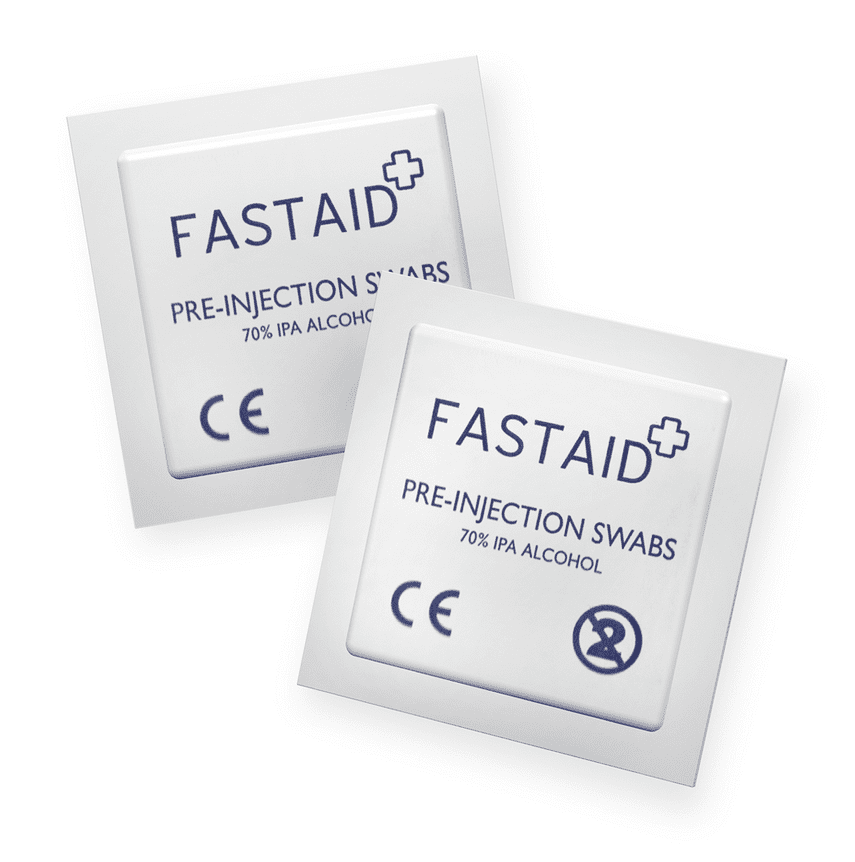
 The ten-swab listing describes a consumable accessory. Owning a swab cannot guarantee a safe Melanotan 2 routine or superior tanning results.
What a pack description can say
It can state a pack count and seller-reported attributes such as alcohol concentration, individual wrapping and manufacturer. Check the actual package before treating any of these as verified. The separate label and maker article covers those claims specifically.
What the accessory cannot verify
A swab does not independently establish the identity, sterility, safety or clinical suitability of another substance. It also cannot predict skin pigmentation. NHS specialist pharmacy guidance describes injectable-medicine manipulation as a high-risk clinical activity with multiple contamination and error controls; that professional context cannot be replaced by a retail accessory claim. See the NHS Specialist Pharmacy Service overview.
This article does not provide injection or cleaning technique. Read current item specifications and seek qualified advice for a medical question.
Read an accessory claim within the system it does not assess
An accessory can have a clearly described property while leaving the surrounding system unassessed. Understanding that difference prevents a narrow item statement from becoming a promise about a substance, a procedure or a personal outcome. The examples below concern claim boundaries and professional-source context; they are not preparation or cleaning instructions.
Keep a component statement inside its own boundary
Begin with the exact subject of the accessory statement. A pack count, a named material and a description of packaging each concern a particular item or presentation. They do not share one automatic evidential meaning. A reader should be able to identify which property is stated without having to assume that every other relevant property has been assessed.
Imagine a fictional record confirming that an accessory is included in an order. That statement can clarify the inventory. It does not independently establish the identity of a separate substance supplied alongside it, the condition of other objects or the appropriateness of a proposed activity. The inclusion has a defined commercial subject, even when the objects are advertised together.
Words such as essential or partner can obscure that boundary. They suggest a relationship between the accessory and a desired result without identifying what was assessed. An accessory may be described as part of a group, but the presence of the group does not supply an evaluation of the whole process or a result for an individual person.
The organisation-role and label explanation examines a different narrow claim: which organisation is named and what role the source assigns it. That identification remains useful, but it cannot be used to complete an unrelated assessment. Knowing who a source names does not establish that every statement about a different item or procedure has been verified.
A careful summary therefore retains the accessory property and the unassessed extension separately. It should not imply that a documented component is worthless because it cannot answer every question. Equally, it should not let the component’s familiar role stand in for evidence about the entire system. The value of the record lies in knowing exactly what it concerns.
Read a professional risk framework within its clinical setting
A professional guidance document has an intended audience and setting. Those features affect how its statements should be read. A framework designed for medicines governance is not a retail checklist and should not be shortened into a consumer method. Its existence does not establish that a particular marketed product or private situation has undergone that professional assessment.
The NHS Specialist Pharmacy Service guidance discusses assessment of product- and process-related risks within organisational medicines governance. It addresses professional decisions and appropriate clinical settings. This article uses that context to explain why one supplied accessory cannot replace a wider assessment; it does not reproduce the framework’s clinical scoring, preparation steps or operating instructions.
For a fictional source comparison, a seller mentions an accessory and a reader finds professional guidance about a much broader activity. Placing the two sources beside one another does not establish that the seller’s package meets the guidance or that the reader can carry out the professional assessment. The missing connection should remain explicit rather than being supplied by association.
Keep the scope of a quoted professional term intact. If a document concerns an organisation’s responsibilities, a summary should not recast it as a product approval or a personal assurance. The document can explain why several questions require assessment without answering those questions for an individual item, order or person who has not been assessed within that setting.
This is a source-reading distinction rather than an invitation to replicate a clinical process. A more detailed webpage does not acquire the authority of the professional setting it describes. When the relevant assessment is absent, preserve that absence. Do not turn a reference to professional standards into a simplified substitute procedure or an assurance that an accessory resolves every concern.
Do not turn a supplied accessory into a whole-system assurance
A commercial bundle can group objects without establishing a single tested system. The title may be convenient for navigation, while the component descriptions identify separate properties. Keep those properties with their own subjects. The fact that the objects can appear in the same basket does not establish a documented relationship between every claim made about them.
Our grouped-accessory record guide explains why category words should not fill missing fields for individual components. The same boundary applies to a broader reassurance. An accessory label does not become a result for another substance merely because both descriptions sit under one kit heading or share a familiar product context.
Consider an illustrative claim that a complete selection makes an outcome assured. To assess that claim, the reader would need evidence about the outcome and the particular system being described. An inventory list answers what the source says is included. Counting the objects more accurately does not, by itself, create the absent assessment or establish the asserted result.
A clarification can still be useful when it remains narrow. It may identify the supplied accessory, correct a pack description or explain which document supports a particular specification. Retain that answer without enlarging it into medical suitability, procedural safety or a prediction of an individual’s appearance. A commercial response and a qualified clinical assessment have different responsibilities.
The final account should name the component statement, the wider conclusion someone is trying to draw and the relationship that has not been established. This makes the limits understandable without inventing a guarantee or a failure. It also keeps the purpose of the article clear: interpreting accessory claims while leaving personal health and clinical-process questions with appropriately qualified professionals.
References checked: 15 November 2026.