
Skin Hydration and Sun Exposure
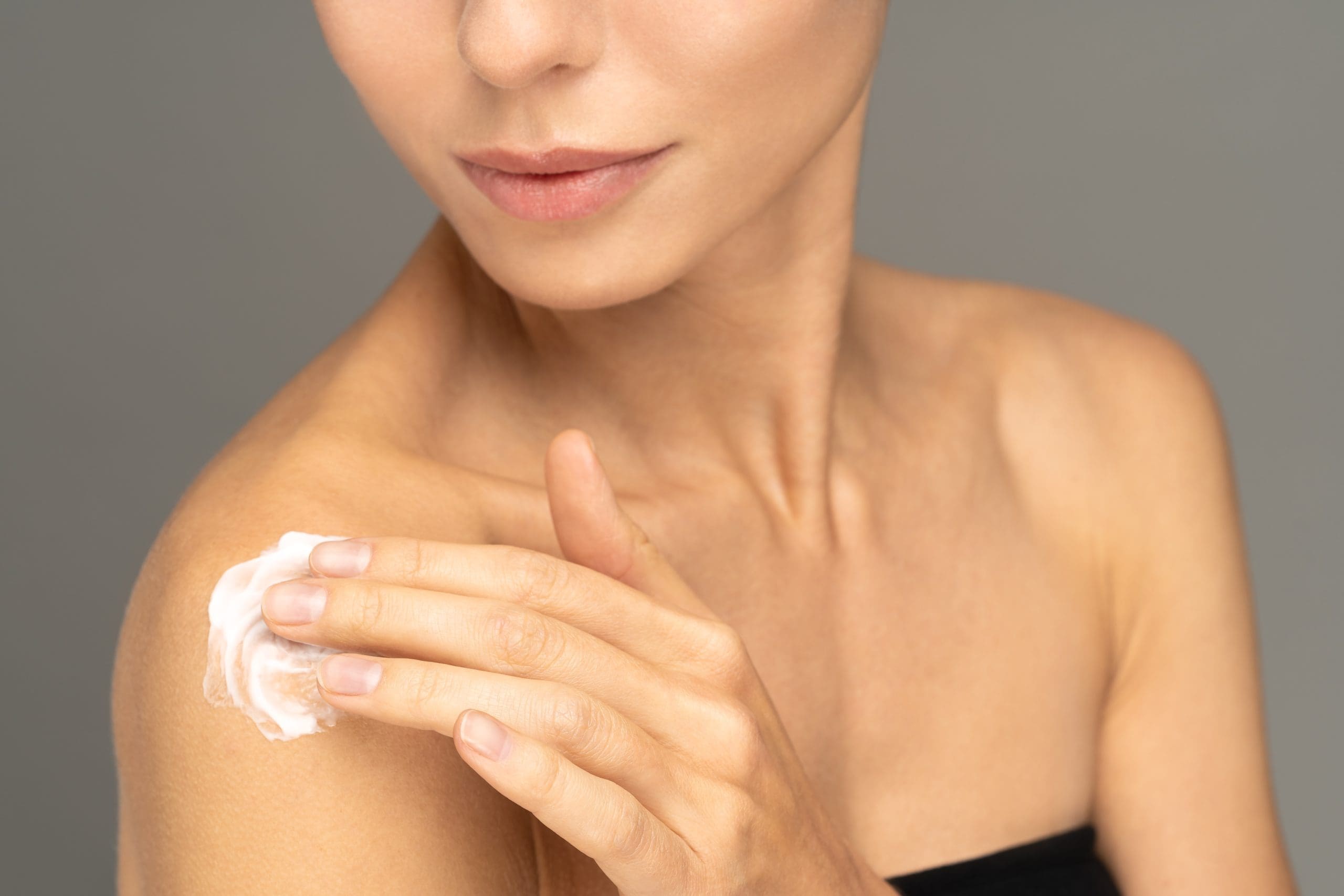
Moisturising supports dry skin and can make it feel more comfortable. It does not turn ultraviolet (UV) tanning into a safe activity or prevent sunburn. These are different questions: skin care helps with dryness, while sun protection limits UV exposure.
How moisturisers help
Emollients help soften skin and retain moisture. Choose a product that suits your skin; some people prefer a richer cream in winter or after washing. The NHS emollients guide explains their role and how products differ. Irritation, persistent cracking or a changing lesion deserves individual medical advice.
Before and after time outdoors
Gentle washing, moisturising and avoiding products that irritate your skin are useful care habits. A lukewarm shower and moisturiser can help dry skin feel less tight. If skin has burned, moisturiser cannot undo the UV damage. Sunburn and peeling should not be presented as problems that a cream reliably prevents.
Sun protection is a separate step
Use shade, clothing and appropriate sunscreen according to the conditions and current guidance. The Cancer Research UK sun safety guide explains why even high-SPF sunscreen is not a licence to extend time in strong sunlight. Cosmetic moisturisers and tanning accelerators do not replace this protection. A tan is not proof that skin has avoided damage.
Read a moisturising label and a protection claim separately
A product may have a moisturising purpose, a separately stated sunscreen purpose or another declared cosmetic role. Those properties should remain attached to the particular formulation and claim. Reading the label at that level avoids treating comfort as a protection result while also avoiding the opposite mistake of assuming that no moisturising formulation can carry a specific sunscreen claim.
Identify the property the particular label states
Begin with the property the description actually states. A moisturising claim concerns the product’s stated role for skin moisture or comfort. A protection claim concerns a different property. A retailer may place both kinds of wording near one another, but their proximity does not establish that each applies to the same named formulation or has the same supporting evidence.
The NHS emollients information explains their moisturising purpose. That clinical information is not a certificate for a particular retail product and does not independently establish its UV-protection properties. The distinction is about the subject of the evidence: a general explanation of a product class cannot complete every unstated claim on an individual cosmetic listing.
A person’s experience provides another type of information. Someone may report that a product feels comfortable or that their skin seems less dry. That account can be described as their experience. It should not silently become a measurement of radiation exposure, a finding about another person’s likely response or confirmation of a separate claim the label does not state.
For an illustrative label comparison, one description names only a moisturising role and another names that role together with an explicit protection statement. The account can preserve the difference without assuming the products share every property. The second label also needs to retain its actual wording and formulation rather than becoming evidence for any similar-looking bottle.
Where a description is incomplete, identify the missing property precisely. A question about the named formulation or the source of a claim is more useful than a general request for reassurance. It keeps the commercial enquiry within the information a seller can clarify, without turning the conversation into an individual skincare or sun-exposure recommendation.
Keep a dual-purpose formulation tied to its own evidence
A dual-purpose formulation should be read as that particular formulation. The presence of a moisturising claim does not erase an explicit sunscreen claim, but neither does the general idea of moisturising create one. Each property should retain the evidence and qualification relevant to it. The reader should not have to infer either conclusion from the category name alone.
An image showing several products can obscure this distinction. A moisturiser may appear beside a sunscreen, or a display may group products by a broad skincare theme. The grouping does not make their claims interchangeable. A statement attached to one item should not complete an unstated field for another simply because both appear in the same photograph or routine description.
The texture-endpoint explanation develops the related problem of borrowing an outcome from a neighbouring product or observation. A preferred finish can be reported without becoming evidence that another product protects against UV. The formulation, property and subject of each finding should remain visible even when the surrounding description uses the same reassuring appearance language.
Version information can matter as well. A current label and an older image may refer to different presentations, and the similarity of their names does not resolve that difference. Retain which formulation the source actually describes. A clarification about a new version should not silently change the claims associated with an earlier confirmation or an unidentified stock photograph.
A missing link between claim and formulation should stay unresolved until relevant information supplies it. That does not require inventing a negative finding about the product. It means that a particular conclusion has not been established by the record being read. The explanation can remain precise without offering either a blanket assurance or an unsupported judgement about an unverified item.
Separate a comfort observation from a UV outcome
Comfort and protection can both matter while remaining different observations. A person may describe an improvement in how their skin feels without having measured UV exposure. The account should retain what was observed and avoid giving the sensation an additional role. A favourable experience does not independently settle a different environmental or clinical question.
The heat-comfort and UV explanation adds another distinction: feeling cooler, drinking fluids and applying a skin product concern different subjects. The word hydration should not merge them into one supposed protective result. A reader needs to know which observation belongs to which question before the account is treated as evidence of a broader outcome.
Timing alone does not create the connection either. A narrative may describe using a cosmetic and later spending time outdoors without recording the conditions relevant to a UV assessment. The sequence can be reported as a sequence. It should not automatically become a finding that the cosmetic changed the radiation exposure or made the later activity appropriate.
The lasting-look and observation-continuity explanation considers how appearance accounts can change between occasions. A different cosmetic, image or description should remain visible. Repeating a favourable appearance phrase does not establish an unchanged formulation, a continuous observation or a lasting protective property. Each conclusion needs information matching the subject it claims to describe.
The finished account should name the particular label, distinguish its stated properties and preserve the limits of any personal observation. It can guide a reader to a more precise product-information question without inventing a skincare regimen, prescribing a formulation or treating a moisturised appearance as evidence that UV exposure has been adequately assessed.
References checked: 15 November 2026.