
UniSharp Nevershare 29G: Pack Specifications
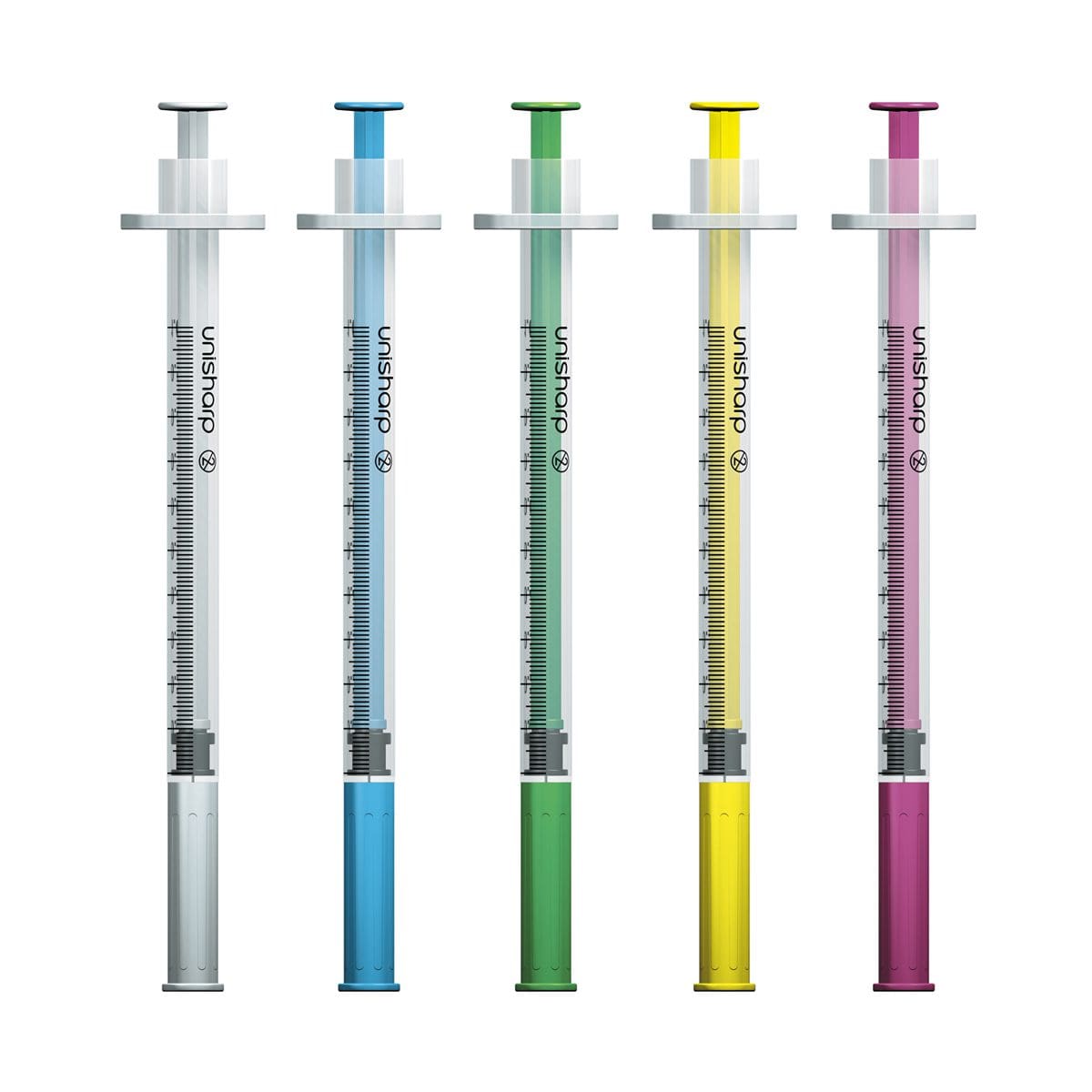
The UniSharp Nevershare 29G listing should be read as a specification for a packaged accessory. The gauge and pack count are not proof that any associated cosmetic injection is safe.
Check gauge and quantity
Compare the stated 29G specification, number of individually packaged units and the exact product name with the current listing.
Do not infer sterility from a photo
Packaging condition, labelling and expiry information matter; a stock image cannot verify a particular item in a shipped pack.
Separate accessories from the peptide claim
A syringe description cannot validate an untested marketed Melanotan product. Cancer Research UK warns about the safety and quality uncertainty of those products.
A 29G gauge describes needle diameter, while length, hub design and packaging are separate specifications. Product copy should use the maker and model exactly as shown on the current listing rather than substituting a similar brand name. Where the page refers to sterile packaging, it should be a verifiable packaging statement, not a blanket assurance about a different product used with the accessory.
The accessories category lists current supply information. Further reading: syringe and accessory catalogue, Cancer Research UK and NHS sun safety.
Trace a gauge label to the packaged object
A pack title can repeat the same gauge while referring to a different model, package or level of the inventory. Reading those levels separately avoids an apparent match that the records do not support. The examples below concern descriptions of packaged objects, not selection of equipment for a procedure.
Keep the outer pack and the individual unit distinct
Begin by naming the object to which each number belongs. An outer carton, an individually wrapped unit and a photographed example are different subjects. A quantity stated beside one of them should remain beside that subject. A reader should not have to infer whether a count refers to cartons, contents or illustrations.
Imagine a comparison record that describes one outer pack on one line and its individual contents on another. Both lines can be correct without describing two separate purchases. Adding the lines as though each were an independent supplied object would change the inventory. First establish the relationship between the package and its contents.
A photograph introduces a third representation. Several visible objects may have been arranged to illustrate a category, while the selected order concerns a stated pack. The photograph is useful for recognising what is pictured. It does not independently establish that every pictured item, colour or arrangement forms part of that selection.
Keep the wording of a quantity qualification as well as the figure. Expressions referring to each pack, each unit or the complete selection are not interchangeable. Removing the qualification can preserve the number while changing its meaning. A comparison is clearer when it identifies both the object counted and the boundary of that count.
If the outer-pack description conflicts with an individual-unit description, retain both statements as an unresolved discrepancy. Do not choose the more reassuring one simply because it appears in a larger heading. The useful clarification identifies which selected package the statement concerns and which field needs correction, rather than proposing a use for the item.
Retain the model when two items share a gauge
A gauge designation is one property, not a complete model record. Two descriptions sharing that designation may still differ in the other fields they report. A match in one field should therefore be recorded as a match in that field. It should not silently become an assertion that the items are identical in every respect.
For an illustrative comparison, Record Alder names a model and a gauge, while Record Birch supplies only a gauge and an image. The shared gauge does not fill Birch’s missing model field. Even if the image looks familiar, the source has not yet established that both descriptions concern the same named item or supplied presentation.
The device-dimension and performance explanation develops the next distinction. Identifying a physical feature does not establish a pain-related outcome, a clinical purpose or a measurement-performance result. A model comparison should preserve its documentary subject instead of borrowing an attractive performance claim from an article about a similar-looking accessory.
Names can also be shortened differently across a title, a packet and a seller response. A shortened name may help a reader navigate the catalogue, but it can omit the version information needed for a precise match. Retain the fuller identifier when it is supplied and ask which presentation an abbreviation is intended to describe.
An organisation name needs similar care. A catalogue attribution, a manufacturer label and a retailer identity have different roles in the record. The presence of the same business name somewhere on two pages does not resolve every model or packaging difference. Keep the particular attribution with the source that actually makes it.
Leave an unreported dimension unresolved
An unreported dimension should remain unreported in the comparison. It is tempting to complete a sparse line from a more detailed neighbouring page, especially when the pictures share a colour or general shape. That creates a new assertion. The additional detail needs a documented connection to the exact item being compared.
Suppose one description states a dimension and another does not. The comparison can accurately say that the field is stated in the first record and absent in the second. It cannot conclude that the second item has the same dimension, nor that it necessarily has a different one. Both conclusions exceed the available wording.
Keep an enquiry limited to the missing field and selected reference. A useful catalogue question identifies the item, the description being read and the property that is unclear. It does not require converting the incomplete specification into a personal equipment recommendation or guessing which version a person should use for a medical purpose.
When a clarification arrives, attach it to the version it covers. A statement about one current listing should not overwrite an older confirmation or automatically apply to every similarly named pack. Preserving the earlier wording makes it possible to understand what was uncertain and what the later answer actually resolved.
The finished record may therefore contain confirmed matches, explicit differences and unanswered fields together. That is a more informative account than a single claim that two packs are equivalent. It retains the package boundary, exact model and source of each stated property without presenting the accessory as evidence about another substance or an entire procedure.
References checked: 15 November 2026.