Tanning Injections Without Sunbeds: What Is Known
The question joins two separate issues: whether a marketed product can change pigmentation and whether a person can avoid ultraviolet exposure. Neither question establishes the safety of an injected product.
Sunbeds are not the only variable
Skin colour can change with natural sunlight, cosmetics and other factors. A photograph without a baseline and exposure history cannot show which factor caused a change.
A darker look is not protection
The NHS advises that a tan does not protect against harmful sunlight. A claim that sunbeds are unnecessary must not be read as permission to skip shade, clothing or sunscreen. Read the explanation of UV radiation and sun safety for the radiation terminology behind that advice.
Check the product claim separately
Cancer Research UK says marketed Melanotan products have not been tested for safety, quality or effectiveness. A retail listing or testimonial cannot verify the contents of a specific vial.
A claim about avoiding sunbeds should specify whether it concerns the appearance of colour, time spent outdoors or measured ultraviolet exposure. These are different outcomes. It should also distinguish a laboratory observation about a compound from the quality of a retail vial. If a person notices a changing or unusual mole, the relevant next step is a healthcare assessment rather than interpreting the change as a normal tanning response.
The site guide to Melanotan 2 explains the terminology. Further reading: Melanotan 2 definition and terminology, Cancer Research UK and NHS sun safety.
Separate no sunbed visits from no UV exposure and proven efficacy
Without sunbeds describes the absence of one activity. It does not, on its own, document every source of ultraviolet radiation, establish what caused an appearance change or show that a marketed product is safe. Understanding those separate statements is more useful than treating a yes-or-no answer as a product guarantee or an instruction to seek another type of exposure.
Read the activity statement at the scope it actually has
A person may report that they did not visit a tanning salon during the period in question. That is a statement about an activity. Unless the account supplies more information, it does not describe time outdoors, the conditions at a location or other relevant circumstances. Adding the word therefore before a claim of zero UV would introduce a conclusion that the activity statement has not established.
The same reading applies to a product caption. No sunbeds needed can suggest several meanings: a promise about an appearance result, a description of someone’s habits or an assertion about protection. The writer should identify which meaning is intended. A reader should not have to choose the most reassuring interpretation while the caption leaves its central claim undefined.
This distinction does not suggest replacing a sunbed with outdoor tanning. It concerns the evidence behind a statement. A report that omits one exposure setting cannot be used to calculate another, and a missing measurement should not be filled with a personal experiment. Keep the question of what was recorded separate from any proposed action.
A location or season is not a complete exposure record
An account may mention winter, cloudy weather or being in the UK. Those details provide context but do not quantify an individual’s ultraviolet exposure. A date and place also do not tell you where someone spent the whole observation period. The absence of a holiday photograph is not a measurement of time outdoors, just as a weather label is not a product test.
When reading a before-and-after account, distinguish information explicitly recorded from assumptions made by the reader. If the account says no sunbed sessions but gives no further exposure information, that is its limit. It should not become no UV, controlled conditions or proof of an isolated product effect simply because those phrases make the story easier to summarise.
More detailed environmental information would still answer only part of the question. It would not independently identify the contents of a vial or establish a particular clinical outcome. The evidence overview for tanning injections explains why those claims need different supporting records. An exposure description and a preparation-specific result should not be collapsed into one piece of evidence.
An appearance difference does not identify its cause
A photograph can show an apparent colour difference while leaving its explanation uncertain. Comparing selected images introduces questions about the starting appearance, lighting, image processing and other cosmetic changes. Those questions remain relevant even when the caption says that sunbeds were avoided. Removing one possible explanation does not establish that a product caused everything else observed.
Nor does an individual account establish how often a result would occur across a wider group. A personal experience may be accurately described yet still be unable to supply a dependable success rate. Comments repeating a similar claim are not automatically independent, measured observations. The number of repetitions should not stand in for a defined outcome and an identified comparison.
A small historical experiment and a current retail testimonial also concern different settings. The early Melanotan-II pilot study assessed skin pigmentation in a defined research setting; it does not certify a current vial or establish a universal result for people avoiding sunbeds. Its existence cannot repair the information missing from a separate retail account.
Missing information does not prove that the reported difference was impossible. It means that the account cannot settle the broader causal question on its own. A balanced reading retains the observation and its uncertainty together. It should avoid both promising the same result to everyone and declaring a guaranteed absence of any change from an incomplete account.
Keep sunbed advice and product advice independent
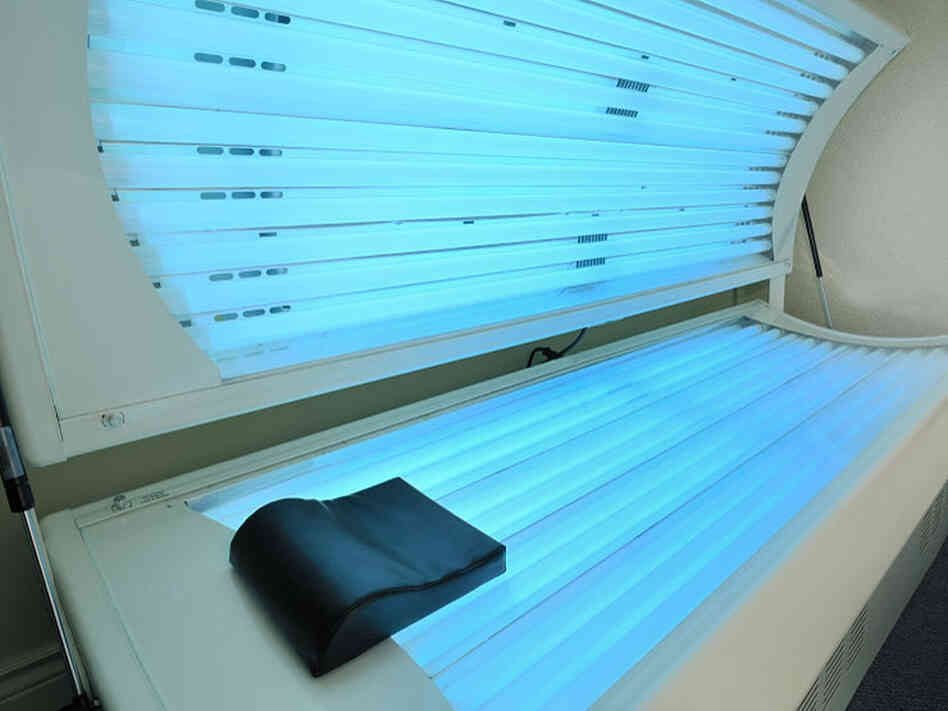
NHS inform explains that sunbeds expose skin to ultraviolet radiation and increase skin-cancer risk. Avoiding those devices does not establish that a different product is safe or effective. These are separate assessments. A claim about the absence of one risk should not be stretched into an assurance that every other risk has been removed.
The NHS sun-safety page states that a tan does not protect skin from harmful sunlight. A claim about darker colour without sunbed visits therefore supplies no additional exposure allowance. The protection question should remain grounded in public-health advice, rather than being recalculated from a photograph, a product label or the strength of a testimonial.
This article does not provide a tanning schedule, a product-use routine or a safe amount of ultraviolet exposure. Its purpose is to explain the boundaries of a common claim. Questions about an unusual reaction, a new or changing mole or another personal health concern belong with a qualified healthcare professional. An appearance account should not be used to explain away a concerning change.
References checked: 14 November 2026.