Melanotan 2 Nasal Kit: Evidence Limits
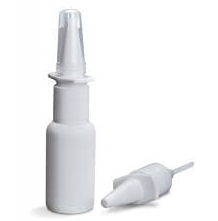
A Melanotan 2 nasal kit listing describes its named bottles, vials and accessories. It does not establish preparation, dosing or administration instructions. The current listing can describe its components, but it cannot by itself establish clinical safety or effectiveness.
What would support an absorption claim?
A meaningful claim would identify the exact formulation, amount measured, study participants, method and results. A generic assertion that a nasal method absorbs a given percentage of an injected method is not evidence for the specific kit.
What would support a safety claim?
One would need evidence about contents, quality, adverse effects and the studied population. Cancer Research UK warns that Melanotan nasal sprays are not tested for safety, quality and effectiveness as cosmetic tanning products. Read its guidance and the site’s science and risk overview.
Keep the kit question separate
The component guide explains the listed items. This article is about evidence limits. It gives no nasal-use steps, dose or UV recommendation.
Nasal-format evidence and contextual discovery
A nasal-format claim may concern the named formulation, a reported measurement or an assertion about general safety. Those are different evidential questions. Keeping them separate helps the reader understand what a particular record addresses without assuming that a format label or an analytical document establishes every result suggested by the surrounding advertisement.
Identify the formulation behind the asserted result
Identify the preparation behind the asserted result. A broad compound name does not necessarily describe the exact formulation examined in a study. The account should retain the relevant material and setting instead of treating every similarly named item as the same tested subject. A route label does not supply that missing identity.
The cross-format contents comparison answers a narrower inventory question. It names components in selected offers without assessing an individual’s response. A bottle or vial appearing in that table is a listed item, not proof of an absorption result or a general statement of suitability.
Dates and versions matter here too. A historical paper, a previous product description and a current offer can use related terminology while concerning different material. A clear summary should explain which record it quotes and how the proposed connection is supported. A more recent sales page cannot update the subjects of an older experiment.
An unspecified formulation detail should remain unspecified. The gap should not be filled from another pack, another seller or a different research preparation simply because the names are similar. The available record may be unable to answer the particular comparison, and that limitation should remain part of the conclusion.
This is an evidence-reading distinction rather than an invitation to test a preparation personally. It supplies no preparation steps, administration method or individual routine. An unanswered question about a marketed item should not be turned into an unsupervised experiment to create the missing evidence.
An analytical record and an absorption claim differ
An analytical result concerns the question addressed by its method. It may report information about an identified sample without measuring how a preparation behaves in people. A claim about absorption needs relevant observations for that outcome. The existence of a laboratory document does not automatically supply them.
Keep the measured quantity visible. A labelled mass, a reported purity figure and an amount measured in a particular study setting are different records. A percentage should retain what was divided or compared. An unexplained figure should not be reused as a dose conversion or as a guarantee for another preparation.
The supplier-document provenance guide explains how the issuer, sample identifier and date help define a record’s scope. Read it when a report is offered as support for a wider assertion. It distinguishes what the document actually states from the additional assurance a seller or reader may attach to it.
A photograph does not resolve that distinction either. It can depict a package or an appearance while being unable to identify the tested material or the outcome measured by a separate document. Displaying several records together should not conceal the need to connect each conclusion to an appropriate source.
A careful account therefore states which result is reported and which comparison remains unmeasured. It does not invent an absorption percentage, equivalence factor or personal expectation. A precise limitation gives the reader more useful information than a broad declaration that a format is proven without identifying what the evidence examined.
A format label does not establish a general safety result
A format label does not establish a complete safety finding. An account can describe one feature of a route while leaving other outcomes unanswered. A broad reassurance needs a defined subject and relevant evidence rather than an assumption that one descriptive feature answers every possible concern.
The original public-health and evidence references above retain their own roles. They should not be read as endorsements of a product displayed nearby, and their cautions should not be rewritten into exceptions based on an attractive bottle image or an unsupported comparison with another format.
An individual experience has a narrower scope too. Someone may describe what appeared to happen without independently identifying the material, recording every other influence or establishing how often the same experience would occur in a wider group. The report should not become a dependable rate through repetition alone.
Missing evidence also does not prove a universal absence of effect. The appropriate conclusion remains limited to the question the available record cannot settle. It is equally important to avoid a guaranteed benefit and a guaranteed negative result when neither is established by suitable observations.
This article’s role is therefore to keep formulation identity, measured outcomes and general assurances separate. The contents guide can answer a bundle question; a source record can answer its particular research question; neither supplies every other conclusion. No product endorsement, dose conversion, UV recommendation or personal timetable is introduced by that distinction.
If a source gives only selected findings, retain those limits when sharing it. A shortened summary should not remove the sample, comparison or unanswered outcome in order to sound more decisive. Clear scope is part of an accurate explanation, rather than an optional qualification to be discarded after the headline.
References checked: 14 November 2026.