
50mg Melanotan 2: Five-Vial Safety Context
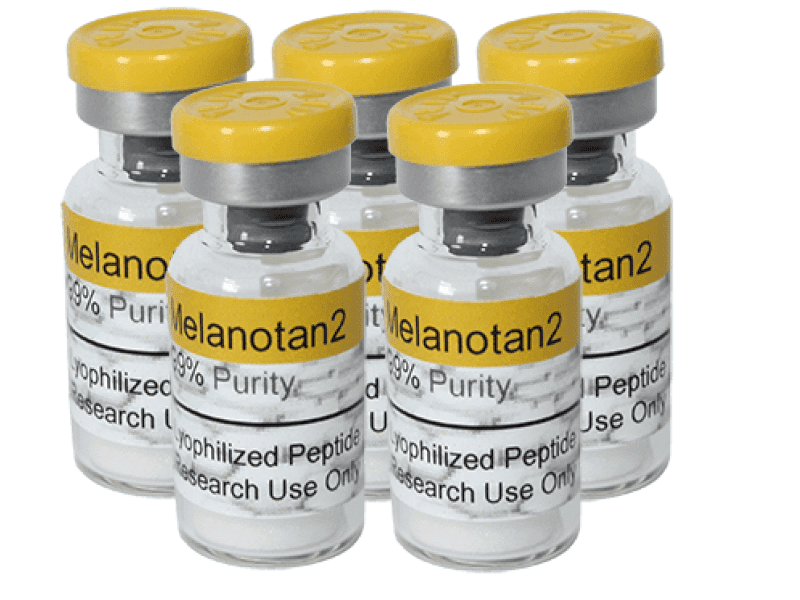
A product title stating 50mg across five vials describes an advertised pack. It is not a laboratory finding about each container. The important safety-context question is whether a supporting statement identifies the actual material, sample and outcome it is being used to describe.
The M2UK five-vial listing gives a stated total of 50mg and describes five vials of 10mg. These are the listing’s declarations, checked on 19 November 2026. The following distinctions explain why a precise-looking total, a report and a commercial assurance still need to be read as different records.
Keep the pack declaration separate from a test result
The advertised total is a statement about the offer. A test result is a statement about an identified sample assessed for a stated purpose. Multiplying a declared amount by a container count cannot turn the first statement into the second. The arithmetic can be correct while the connection to a particular supplied item remains unestablished.
Start by identifying which quantity is being discussed: amount per vial, total per pack or number of packs in an order. Do not use the phrase five vials to imply five independent confirmations. A shared product name is not a sample identifier, and an order quantity does not describe the scope of an analytical assessment.
The vial-pack catalogue helps distinguish the stated formats. The packaging and quantity guide addresses what labels and images can show. Neither source should be described as a certificate for the material in a specific vial.
For example, an article may repeat the same advertised total found on a product page. Those are two presentations of one declaration, not two independent measurements. Count the underlying records rather than treating the number of matching web pages as evidence of verification.
Identify what a supporting report actually covers
If a report is offered in support of a claim, look for its issuer, date, sample identifier and stated scope. The explanation connecting that sample to the item being discussed also matters. An attractive report image without those details leaves the reader unable to establish the relationship.
| Field | Reading question | Do not assume |
|---|---|---|
| Sample identifier | Which submitted material does the document name? | That a shared brand identifies the sample |
| Date and issuer | Who issued this version, and when? | That a recent screenshot means a recent assessment |
| Scope | Which property and material were assessed? | That one result answers every quality question |
| Item connection | What record links the sample to the item? | That the relationship follows from the pack count |
A hypothetical report naming sample A concerns the sample identified there. It should not be relabelled as a result for five different containers simply because those containers appear together in a photograph. Keep an unconfirmed connection explicit rather than describing it as established.
These are document-reading questions. They do not prescribe a test, certify a laboratory or claim that a particular M2UK report exists. Any statement about an actual assessment needs its own identified record.
A replacement document should identify what it replaces and whether the sample, issuer or result changed. A new file date is not by itself evidence that the material was assessed again. Retain the earlier version when explaining a changed assurance instead of silently combining fields from two documents.
Separate identity, amount, purity and sterility claims
These terms describe different questions. A statement about identity is not automatically a statement about the amount present. A purity assertion does not, by its wording alone, establish sterility. A report needs to be read for the property and subject it actually identifies rather than used as a general seal of reassurance.
A number displayed to several decimal places can look decisive while leaving its meaning unclear. Ask what was measured, for which sample and in what stated units. Do not turn the precision of a displayed value into evidence for a different property that the document does not address.
Likewise, an image of a closed container is not a result for any of those questions. The image may help identify the photographed presentation. It cannot supply a missing sample connection or a measurement. A package illustration and an analytical record should remain identifiable as different sources.
For general background on the substance name and the limits of transferring research findings to retail items, use the Melanotan 2 definition and science and risks guide. A familiar scientific term does not remove an item-specific evidence gap.
Keep authorisation and health outcomes separate from analysis
A document about a sample is not automatically a product-authorisation record, a clinical study or a personal health assessment. The document must identify the conclusion it supports. A reader should not have to infer that a laboratory-style presentation grants permission for human use or predicts a dependable result.
Cancer Research UK warns against Melanotan injections and nasal products. A seller’s pack declaration does not resolve that warning. Nor does a discussion of one analytical property establish the full safety of a preparation or its suitability for someone.
Consider a hypothetical caption that places the words tested and consistent beside a five-vial photograph. The first word needs an identified assessment. The second needs a defined meaning and relevant comparison. Placing them together does not establish that every vial, every order or every person’s outcome was assessed.
The starter-kit catalogue concerns a different advertised purchase format with accessories. Adding those items to a comparison does not fill an analytical or clinical gap in the vial-only record.
Write down the conclusion the records actually support
A useful record identifies the selected product, the declared pack fields, the supporting document and any unresolved connection between them. If a relationship has not been established, say which relationship is missing. Do not replace the missing information with assumptions about a common batch, identical contents or a shared condition.
For an existing order, keep the listing version and any relevant correspondence together. A later clarification should name the item or version it addresses. A statement about today’s offer should not silently become an answer about a different order from another date.
Ask M2UK a specific product-record question when information is unclear. For a personal health concern, seek qualified healthcare advice. These are different enquiries, and a precise answer about a package or document cannot substitute for a personal medical assessment.
Listing and linked references checked: 19 November 2026. No item-specific analytical result is asserted by this guide.