5ml Injectable Water: Listing Checks
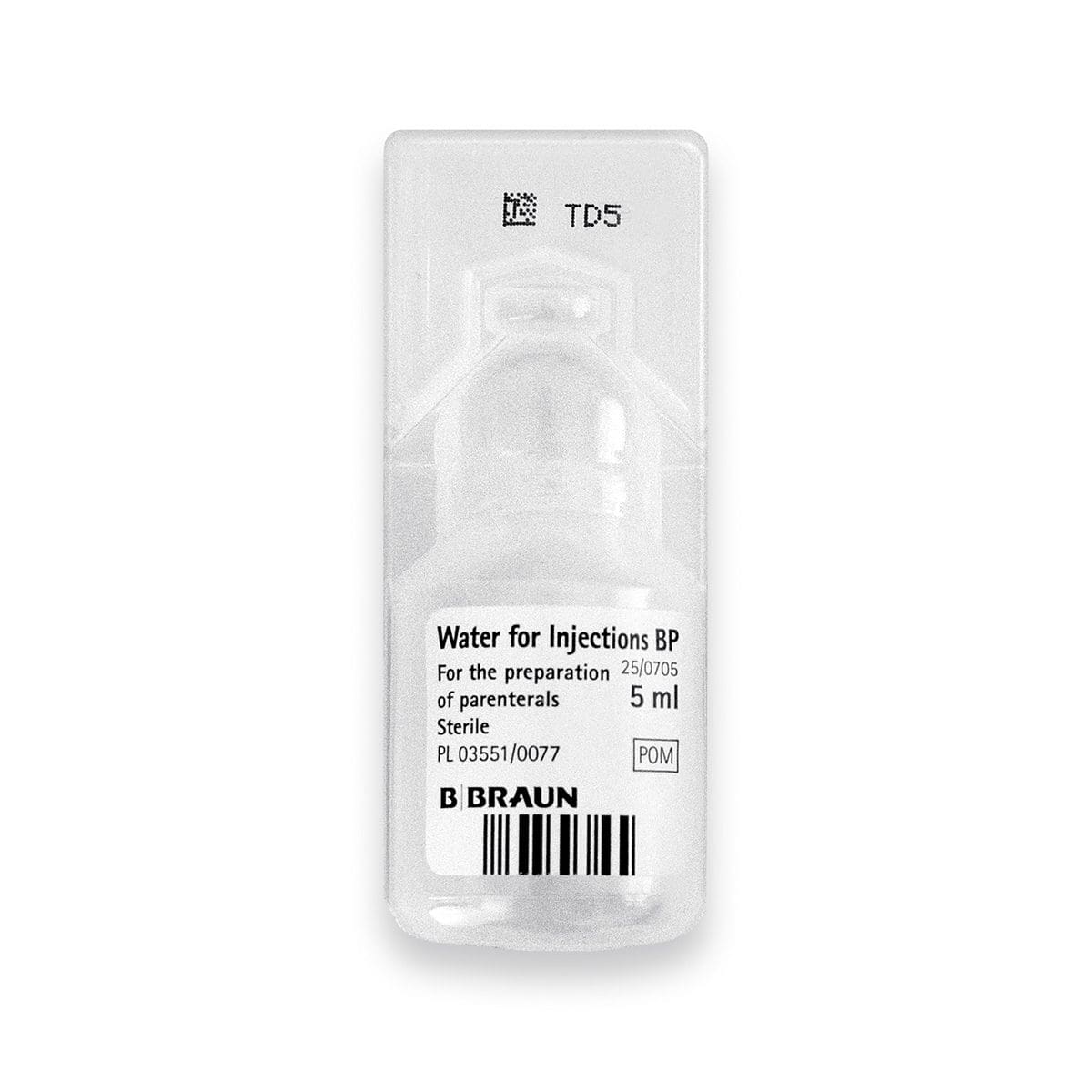
The current M2UK product article lists one 5ml Injectable Water item. This article is about reading that seller listing, not explaining how to prepare a peptide or recommending a particular procedure.
Volume is one item attribute
“5ml” states the advertised container volume. It does not identify the manufacturer, composition, pharmacopoeial standard, container material, expiry or compatibility with another product. The current product text also asserts that the item is not rebottled, has no preservatives and uses a PVC-free container. Those claims require product-specific evidence from the actual label or manufacturer; this article does not certify them.
Separate categories carefully
A licensed Water for Injections SmPC describes a particular medicine and clinical use. It cannot be used to prove that an unrelated retail 5ml item meets that specification. Bacteriostatic water is a different category; do not substitute one name for another without the relevant product documents. The medical terminology guide explains the differences between these water categories.
Compare an order without inferring use
The separate-item versus kit article compares what the product pages name. It does not create a preparation instruction.
Trace the attribution behind a 5ml water claim
A product field is easier to evaluate when its source remains attached. The advertised 5ml figure, packaging assertions and composition statements may come from a seller description, a label or a matching manufacturer record. Those are different levels of attribution. The fictional examples below explain how to retain them without certifying the retail item.
Record who asserts each separate product field
Record each assertion separately before combining it into a product summary. A nominal volume, a container-material statement and a preservative claim concern different attributes. They need not originate in the same document. Treating a paragraph as one verified specification can hide the fact that some fields have a source while others remain seller assertions.
For a fictional example, a seller description names a volume and a packaging feature. A label image shows an item name but its small print is unreadable. The image does not independently confirm the two asserted features. The record should identify the seller as the source of those statements and retain the limit of the image.
Attribution is different from confirmation. The seller states X accurately describes where the information came from. X has been independently verified is a stronger conclusion requiring relevant evidence. A precise attribution can be useful without upgrading the claim, rejecting it without investigation or implying that a generic reference has settled it.
Our object-name dictionary for kit records helps retain the subject of each field. Water item, container and kit are not interchangeable nouns. A statement about the container material should not become a statement about the liquid’s composition, just as an advertised liquid volume does not identify every property of its packaging.
Keep any unresolved field visible in the summary. If the manufacturer or relevant product identifier is absent, do not complete it from a similarly named item found elsewhere. The resulting description may be less comprehensive, but every retained statement will have a clear source and a defined subject rather than an assumed connection.
Keep nominal volume apart from formulation evidence
Nominal volume describes a quantity field attached to a particular object. It does not establish formulation identity, a manufacturing standard or compatibility with another substance. The same volume can appear on unlike products. Matching the numeral therefore cannot connect a retail listing to the specifications of a different item with a familiar name.
Imagine two fictional records each containing the same volume. Record A concerns a labelled retail object; Record B is a manufacturer document for another product. Their matching volume is one shared field. Without a product-identity connection, it is not a basis for applying B’s composition, packaging or other specifications to A.
An asserted absence of preservatives is a formulation claim, not a consequence of volume. A PVC-free statement concerns a packaging claim, not a substitute for composition evidence. Each needs information relevant to its own subject. One confirmed field would not automatically confirm the rest of the seller’s paragraph.
Likewise, an assertion that an item is not rebottled concerns its history or presentation. A generic document for a product category cannot establish that history for an individual item. The relationship between the record and the retail presentation would need to be clear. A convincing document layout cannot supply the missing traceability.
This distinction gives the existing specification questions a practical structure: state the field, identify who asserts it and identify any matching supporting record. It does not provide a method for checking a substance at home. Nor does a complete-looking list establish that an item is appropriate for a procedure or for a particular person.
Match a manufacturer record before applying its statement
A manufacturer record needs to match the product it is being used to describe. Relevant identity details can include the exact name, presentation and identifiers actually provided. Retain those details rather than relying on a shared category word. A document for one defined product should remain attached to that product unless a connection is established.
For a fictional document set, suppose a technical sheet describes Presentation A while the seller lists Presentation B. A shared brand or volume does not prove that the technical sheet covers B. The comparison should identify the mismatch and leave the application of the sheet unresolved rather than borrowing its most attractive specifications.
Document dates also have a role. A later revision may change wording or scope, but its date alone does not establish that it applies to an earlier retail item. A matching record should identify what it covers. The date should remain available for interpretation without being used as an automatic guarantee of relevance.
If a clarification connects a particular record to the exact item, update only the fields that connection supports. A packaging confirmation does not establish a preparation method. A composition statement does not supply a personal-use recommendation. Keeping the answer narrow prevents a useful identity clarification from becoming a broader assurance than its source permits.
The final account should distinguish seller assertions, readable label information, matching manufacturer statements and unresolved fields. It can make the advertised 5ml item easier to understand without certifying it or transferring the specifications of another medicine. The existing separation between product categories and clinical instructions should remain intact.
References checked: 14 November 2026.