
Tanning Injection Vials: Terms and Claims
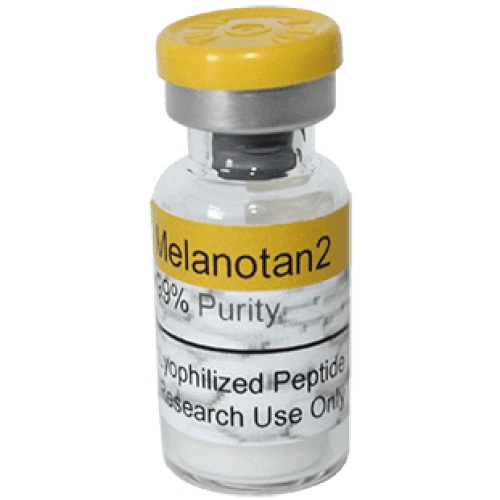
“Tanning injection vials” is a commercial description of a container and intended product category. It is not an assurance that the contents, purity, sterility or tanning effect have been verified.
Vial, quantity and formulation
A vial is a container. A label may state an amount or a count, and a seller may distinguish individual vials from multi-vial packs. Those details do not establish that every vial contains the stated substance or that different products have equivalent composition.
“High quality” needs its own evidence
Packaging, dispatch information and a confident product description can help explain an order, but they do not independently establish purity or a clinical outcome. Verify any batch or manufacturer claim against a relevant record for that item. Do not use another product’s research result as a proxy.
UV risk is separate
Skin darkening does not demonstrate protection from ultraviolet radiation. Cancer Research UK explains why Melanotan tanning products have not been shown safe and effective for this purpose and why their claims require caution. This article does not give preparation or injection directions.
Read vial terms as separate evidence fields
A short vial title can compress several unlike quantities into one line. Reading each quantity as a separate field prevents a container count, a declared substance amount and an analytical result from being treated as interchangeable. The fictional labels in this section explain the distinctions without calculating concentrations or translating a pack into instructions for use.
Separate container count from a declared substance amount
Container count answers how many containers the description names. A declared mass answers what amount the label states for its named subject. They are different units, and neither automatically supplies the other. A title naming several vials should not be read as confirming what each contains unless its wording clearly assigns the declaration to each vial.
Consider fictional Label A stating two containers with a declared amount attached to each, and Label B stating only a total amount for the package. The numbers may be easy to manipulate, but the records have not necessarily made the same statement. First preserve the original scope: per container, per package or not specified.
If the scope is absent, do not repair it through a photograph of one vial. The photograph may illustrate a component rather than the whole package, and its label may not be readable or current. A plausible arithmetic interpretation is still an interpretation until the record identifies which object the amount describes.
The word vial itself names packaging, not a substance specification. Different contents can be supplied in similar containers. Equally, similar product names can refer to different presentations. Keeping object name, count and declaration in separate entries avoids allowing the container’s familiar appearance to imply a verified formulation.
A useful label comparison therefore starts with the seller’s exact words and units. It can describe what is declared without endorsing the declaration as measured fact. This distinction matters before any consideration of value, quality or outcomes, because those later conclusions would otherwise rest on a quantity relationship that the source never actually stated.
Keep formulation wording distinct from an analytical result
Formulation wording can describe a physical presentation or stated composition. An analytical result describes what a specified test found about a specified sample. A label stating a formulation is not itself that test, while a result for another sample cannot silently become a measurement of the labelled item.
Our guide to following an injection claim from listing to source examines the connection between those records. The missing step is often not a more impressive percentage but evidence that the report’s subject matches the selected product. A report can be authentic while the relationship to a particular vial remains unestablished by the supplied information.
One measurement should also retain its purpose. A result addressing a chemical property does not automatically verify every declared quantity, contamination question or clinical claim. The name of a test cannot be used as a universal quality label. Read its reported subject and result before deciding which field it actually informs.
In a fictional comparison, a label declaration and a separate report might use different units or describe different sample conditions. Those differences should be explained by the records, not converted through an assumed recipe. The purpose here is to identify the mismatch, not to derive a preparation, concentration or quantity for administration.
Where the connection is absent, the accurate statement is that the analytical support for that field has not been established from the available material. That is narrower than declaring the product good or bad. It keeps the evidence gap specific and avoids turning uncertainty into an invented positive or negative finding.
Identify the missing field instead of inferring it from packaging
A missing field can be easy to overlook when the packaging looks complete. A label may supply a name and a declared amount while omitting a relevant presentation detail. Another image may show an identifier without a readable relationship to the selected item. Neither gap should be filled by borrowing a field from a neighbouring product.
The same principle applies to stock photographs reused across a range. Their role is illustrative unless the surrounding description establishes otherwise. A visible number on the pictured vial should not overwrite an explicit selection elsewhere on the page. If the records disagree, preserve both statements and identify the conflict rather than combine them into a new description.
Dates and versions make the distinction more reliable. A later label design may alter wording without providing a new test result, while a new report may concern a different sample. Keep those events separate. The fact that two documents are recent does not establish that they refer to the same product or support the same declaration.
A concise comparison can list the named container, the stated count, the declaration’s scope and the matching evidence, if supplied. Unknown entries remain unknown. This is more informative than a single adjective such as high quality, because the reader can see which facts are stated and which conclusions have not been established.
The resulting record is about terminology and evidence identity. It does not establish that a product is appropriate for an individual, equivalent to an authorised medicine or capable of producing a specified appearance. Those questions require their own relevant evidence and context; they cannot be answered by making a compact vial title appear more complete than it is.
References checked: 14 November 2026.