
100mg Melanotan 2: Label and Evidence Limits
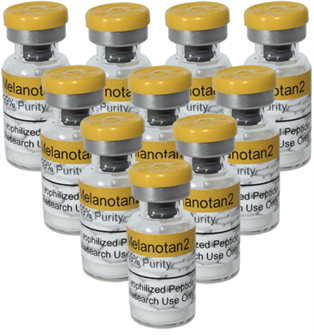
 The current product article describes ten vials advertised as 10mg each, for a stated total of 100mg. Water and injection accessories are not included in that particular listing. The name is a packaging and label description, not a laboratory confirmation of contents.
Label arithmetic versus product evidence
Ten times 10mg gives the advertised 100mg total. For the detailed pack-size arithmetic, see the site’s existing ten-vial comparison. Arithmetic cannot establish the identity, purity, sterility or suitability of an unlicensed product.
What the old comparison could not show
A labelled quantity is not evidence that a product produces a predictable colour, is good for the body or reduces sunburn risk.
Separate sun protection from appearance
Cancer Research UK says Melanotan products have not been shown safe and effective for tanning, and a tan does not protect adequately from UV harm. Read its Melanotan guidance and sun safety advice. This article does not provide mixing or dose instructions.
Keep the tested sample separate from the advertised pack
An analytical report concerns an identified subject and the properties its method assessed. A retail pack description concerns a selected commercial grouping. The fictional trace below keeps those subjects separate without inventing a certificate, authenticating a supplier’s report or treating a stated package total as a measured result.
Keep the analytical sample with its own record
Begin with the report’s sample identity. A document can name a submitted sample, reference or batch, but the relationship to a selected retail pack needs to be established. A similar compound name is not by itself a complete trace between the tested subject and every item someone may later receive.
Imagine fictional Report R identifying Sample S, while a catalogue page names Pack P. Both discuss a similarly named material. The record still needs to explain the connection between S and P before the report is applied to the pack. The fact that R is a genuine document does not supply an unstated sampling relationship.
Our ten-vial set explanation follows the commercial side of that distinction. A repeated container count can identify a declared set without establishing that each object is the tested sample. The count remains useful as inventory information; it should not be used to multiply the report’s evidential scope.
Keep relevant identifiers in the comparison rather than replacing them with a general tested label. A report number, sample name and stated date answer different identity questions. Where a connection is missing, name it explicitly. An attractive display of the report cannot resolve an undefined relationship between the sample and a retail selection.
A later presentation of the same document also does not create another test. Its webpage publication date may differ from the underlying report date. Retain both roles where they are relevant instead of interpreting a newly uploaded file as a later observation of every item discussed on the page.
Ask whether the report addresses the claimed property
Identify the property the report actually assesses. A result for one analytical question should not automatically become a result for another property or for personal suitability. The method, reported subject and conclusion need to remain together. A document can be informative without answering every quality or health question placed beside it.
The EMA overview of ICH Q2(R2) distinguishes analytical purposes including identity, assay and impurity-related measurements. It provides a framework for analytical validation, not an assessment of the retail pack discussed here. The fictional example uses the general principle that a method’s intended purpose should remain visible; it makes no claim that a supplier follows the guideline.
For a fictional example, Report R gives a result for Property A, while an advertisement claims Property B. The reader needs evidence connecting the result to B. A large numerical value for A does not itself establish B, and the number of decimal places does not enlarge the method’s intended purpose.
Our pack-boundary equation guide explains why a declared total is a different type of record again. Agreement between the arithmetic and a headline is not an analytical finding. Conversely, a result for a submitted sample does not automatically define all package inclusions or establish how a commercial total should be interpreted.
The health outcome remains another separate question. An analytical observation is not, by itself, a clinical study of the appearance or unwanted effects a person may experience. A product-specific health claim needs evidence addressing its own population, endpoint and conditions rather than borrowing the authority of a laboratory document.
Where a report is relevant, describe the finding within its actual scope. Where its relevance has not been established, retain the missing connection. That approach gives genuine analytical work its proper role without turning every reported figure into a broad certificate for the package or a guarantee about its effects.
Retain what a genuine document leaves unresolved
A genuine document can leave important questions unanswered. Authenticity and applicability are different checks. Establishing that a report exists does not establish that the reported sample represents every item in a current selection or that all properties implied by a marketing claim were assessed.
Imagine a fictional report with a clear identity and date but no explanation connecting it to a later package version. The absence should remain part of the record. It should not be filled from a familiar label, a repeated product name or an assumption that the most recently displayed document covers every earlier and later presentation.
Our catalogue-change and outcome-study explanation follows why revised commercial information does not create a measured effect. A new pack name or larger quantity may change the listing while leaving the underlying evidence untouched. The document’s meaning should not expand simply because the surrounding offer has changed.
A clarification should address the precise gap: sample identity, selected version or the property being claimed. An answer to one should not silently settle the others. Narrow clarifications can improve the record substantially without providing a preparation instruction, a personal-use assurance or an invented result for an unassessed endpoint.
The final account should identify the sample, method subject, relevant package connection and remaining uncertainty. It may support a limited analytical description while leaving a wider retail or health promise unestablished. A clear evidence trail is more useful than a universal tested label that hides the boundaries of the actual report.
References checked: 15 November 2026.